Dale Cox, author of the authoritative "Battle of Marianna" brought to my attention John L. McKinnon's "History of Walton County." Published in 1912, "History of Walton County" is unabashedly sympathetic to the white southerners and critical of carpetbaggers and Republicans. Amazingly, McKinnon has a detailed account of Hamilton's the melee with Walton County whites while on a campaign to organize black voters prior to the election for delegates to the state constitutional convention. Emanuel Fortune describes this brawl in his testimony before the Congressional "Ku Klux Klan" committee that interviewed witnessed in Jacksonville in late 1871.
First is Fortune's account:
"I went with Colonel Hamilton to Walton County to inform the people there of the constitutional convention, and to get the republicans there to go in favor of the convention. He and I went into the court-house; the audience, of course, were generally back country people, very poor people. After the meeting, at which he and I both spoke, we were informed that while speaking there was some disposition for a disturbance. After the meeting we all dispersed, and in going to the hotel some colored men came to us, and we were advising them what to do on the day of election. After they came several more came, and there was a right good bunch around us, some eight or ten. The white fellows, who were off at a store not very far off, got very bitter about it, as they did not want us to communicate with them at all. They came hustling up toward us, and Colonel Hamilton, I suppose, got mad, for he spoke very abruptly to them. They pitched right in for a fight, and there was quite a scuffle. Men were going to cut him in the back, but I kept them off. One picked up a rail and it broke in two, and they turned and fled. It all ended by his tripping in the wild grass, and this fellow got on him and choked him. That ended the fight, because he considered that he had the best of it." [Source: Testimony Taken by the Joint Select Committee to Inquire Into the Conditions and Affairs in the Late Insurrectionary States," House Report No. 22, pt. 13, 42nd Congress., 2d Sess (Washington 1972), 98-9.]
Next is McKinnon's version of the same event with some prefacing material:
[342] The carpetbaggers followed close behind us with their best speakers in negro precincts. W. J. Purman, Hamelton and Dickson, with their headquarters at Marianna, were the campaigners through Walton. They made extrava-
[343] gant, rash promises to the negroes, reminding themselves no doubt of the old rhyme:
“Much to promise and little to give Causes the fools in comfort in live.”
“The forty acres and the mule,” was their leading promise to the end. The whites attended all of their meetings when they knew of them, and would take them up on their rash, foolish promises; but they would hold secret, night meetings, and say things that they would not dare say in the presence of the whites. They were good speakers and educated as to books, but bankrupts as to character. They called an open advertised meeting at Euchee Anna in the open day time, pretty much every negro voter was there. This was called their “Grand Rally Meetings.” The white voters were there in force, the meeting was held in the old courthouse in the southern part of the town. They had to be checked up several times in their extravagant statements. They lead us to believe they wanted their opponents to reply when they were through. But when they finished, they had a tacit understanding with the negroes to meet them for private instructions, and they went out in a body in the direction of the hotel where they had stopped, not by the street way, but direct through a grove that intervened, and when they were well in the grove and near the hotel they stopped. Hamilton, a tall, stout, rawboney man of fair complexion, light hair and blue eyes weighing about two hundred pounds, 38 years old, a college athlete in appearance, stood talking to the negroes as they gathered around him in the grove. The white voters who moved on to the business part of town by the street way,
[344] saw that he had stopped and was talking with the negroes. Bill Bell, a farmer from Knox Hill, a full match in build, weight, and years, for Hamilton, with dark complexion, black hair and dark eagle piercing eyes, said, “Men we have had enough of this today, and those negroes have had enough, let’s go over there and send these rascals over the river and the negroes home, where they belong?” “All right” came from everybody. They walked up to the circle, Bell in the lead, while Hamilton was yet speaking. Bell with his right hand on the left shoulder of one negro, his left on the right of another, made a breach and enlarged at the circle, walked right up in front of Hamilton and said in loud unmistakable tones, using severe ugly adjectives, “See here, Hamilton, these negroes have had enough of this stuff today, you are fixing them up to be put under the ground. You were allowed to say too much in yonder building, you can’t sneak out here in these bushes and stir up the devil in them, and let me tell you right here, if you know what is best for you, you had better cross the river and crawl up in your hole.” Hamilton straightened himself up boastingly with an air of bravery, and he was brave with his big crowd of negroes around him and said, “I am a free born American citizen exercising the right of free speech and don’t want to be disturbed in this way.” “You are,” said Bell, “a free born American jackass risking the dangers of a free fight!” “You are more of a jackass than I am,” said Hamilton. As these words fell upon Bell’s ears, he dealt a blow with his right fist directly in Hamilton’s breast that staggered him. It was promptly returned and while these blows and fencings were flying swiftly there went up a cry from the white voters, “A fair fight, a fair fight!” They clenched each
[345) other then and went at it right. The negroes indiscriminately took to the woods, running pell-mell in every direction. Purman and their negro driver made for the hotel, got their horses and were ready on the ground a little while to go for the river. Bell proved more than his equal in a clenched wrestle. Hamilton realizing his situation cried out, “Am I left alone, have they all deserted me?” It was then the white voters laid hold on them, loosed their hold on each other, pulled them apart and there they stood unexhausted in front of each other with their faces scratched a little, the greatest damage done being to their Sunday clothes. Hamilton got into the carriage with Purman and the negro driver and they went down the Douglass Ferry road, the negro driving with such flying speed through the sand and dust that flew so thick and high above their heads, that they were hid from view. When they got to the ferry it was night. They urged Mr. Campbell to help them across that night, that they might be safe. When they had told him what had befallen them that day at Euchee Anna, he told them that it would not be safe to try crossing the river at night and that he knew all of those men and would guarantee their safety with him that night, that all they wanted was for them to let the negroes alone. They stopped until morning in security and passed over the river, and that was the last of carpetbaggerism in Walton. The most remarkable and creditable thing in this whole affair was, that there was neither knife or pistol drawn during the encounter, notwithstanding in these times, and on such occasions men went armed to the teeth. [Source: Florida Heritage Collection http://susdl.fcla.edu/fh ]
The versions are generally similar but with some different details. Fortune's account is an eyewitness testimony recited almost four years after the incident. McKinnon is unclear about whether he was present at the event or is relating an account he heard from others. Either way, McKinnon, publishing his book in 1911, McKinnon was presumably remembering events that took place more than forty years earlier. The major differences are McKinnon's placement of Purman at the scene which Fortune does not mention. Considering that Fortune was, if anything, closer personally to Purman, and mentioned both men repeatedly in his testimony, it is unlikely that Fortune forgot Purman's presence. Hamilton and Purman were so closely associated, particularly in the disdain of white Floridians, that McKinnon probably naturally assumed that Purman was also in Walton County that day. Also, McKinnon does not mention Fortune's role in the fight and instead dismissively refers to the "negro driver." Fortune, conversely, was an able speaker and a candidate for the convention and, according to his son, a fierce and courageous fighter. Fortune, however, does not refer to the desperate scramble to get out of the county and "across the river" that McKinnon describes with obvious amusement. The accounts do agree in the general nature of the fight and that Hamilton got the worst of it. Hamilton, of course, despite his height and youth, suffered from a disabling leg injury and may have already had the chronic respiratory ailment that tormented him for years. McKinnon's physical description of Hamilton conforms with other contemporary accounts, except that McKinnon overestimates Hamilton's age by 11 years.
Friday, October 19, 2007


Wednesday, July 18, 2007
Jimmy Coker- making Florida safe for democracy (United States v. James Coker)
On November 8, 1870, elections were held in Florida for Congressman and state assemblyman. The Democratic candidate, S.L. Niblack disputed the victory of Republican Josiah T. Walls (who had defeated Hamilton for the Republican nomination back in August). Testimony taken in the dispute went into detail about a disturbance at the polls in Marianna on election day. Unsurprisingly, James P. Coker was in the middle of the fray. A number of Jackson County freedmen testified.
According to witnesses, Coker approached a polling station in Marianna and ordered the black men waiting to vote to stand back and, this failing, began hitting people with his walking stick. When the black voters objected and insisted on their right to vote, Coker said that they had been there long enough and that if they did not give way, he would clear them out or he would "have their blood or guts." Coker rushed the polls with a group of white men and when the black men refused to fall back he said "God damn you, I won't leave enough of you to tell the tale, let alone to send the news to [Gov.] Reed." Coker pulled out his pistol and turned toward Jerry Robinson who was standing behind Coker. When Robinson insisted on his waiting his turn to vote, Coker said "Didn't you hear me give the order for you God-damn niggers to leave the poll?" and threatened to kill Jerry Robinson. According to Richard Pooser, Coker stated that the blacks were obliged to vote the Democratic ticket and that if they didn't' they would have to leave Jackson County. Jesse Robinson, a candidate for Jackson County representative to the state assembly that day, testified that he was struck in the mouth by Dr. Alexander Tennille and that he looked back to see Coker and Jerry Robinson fighting and witnessed Coker drawing a pistol with the evident intent of shooting Jerry Robinson. "Little" Jim Baker overtook Coker, seizing him around the waist as Coker struggled to get away, and grabbed Coker's pistol. Baker likely prevented Coker from shooting Jerry Robinson. Benjamin Livingston testified that he heard Baker tell Coker to "go and make up with that negro, or it might cost him a great deal of trouble. He (Coker) said, 'I won't do it; I would rather kill him.'"
Daniel Bryan stated that after Tennille struck Jesse Robinson, he kicked Bryan and said "forty acres of land, God damn you, without a mule." Tennille then approached Richard Pooser who related that Tennille said "Pooser, God damn your radical soul to hell, forty acres of land without the mule. This has been a negro Government, but now it is going to be a white man's Government. You have been voting for niggers, carpet-baggers, and scalawags, and we white men are going to put a stop to it." Tennille waived a hickory stick over his head telling the blacks to get back so the whites could vote. Many black citizens, perhaps 100 to 200, who were waiting to vote went home after this outburst of violence.
For these actions, Coker was indicted by the U.S. District Court for the Northern District of Florida for hindering, delaying obstructing and preventing citizens from exercising their right of suffrage, as guaranteed by the Fifteenth Amendment. A warrant for his arrest was issued on Dec. 13, 1871. The case of U.S. v. Coker was closed without conviction or going to trial.
(sources: 42d Congres, 2d Sess., Mis Doc. 34, Part 2, Additional Papers in the case of Silas L. Niblack vs. Josiah T. Walls; NARA, RG21, U.S. Dist. Courts, Northern Dist. of FL, Tallahassee Div., Criminal Case Files 1850-1871, Box 1.
According to witnesses, Coker approached a polling station in Marianna and ordered the black men waiting to vote to stand back and, this failing, began hitting people with his walking stick. When the black voters objected and insisted on their right to vote, Coker said that they had been there long enough and that if they did not give way, he would clear them out or he would "have their blood or guts." Coker rushed the polls with a group of white men and when the black men refused to fall back he said "God damn you, I won't leave enough of you to tell the tale, let alone to send the news to [Gov.] Reed." Coker pulled out his pistol and turned toward Jerry Robinson who was standing behind Coker. When Robinson insisted on his waiting his turn to vote, Coker said "Didn't you hear me give the order for you God-damn niggers to leave the poll?" and threatened to kill Jerry Robinson. According to Richard Pooser, Coker stated that the blacks were obliged to vote the Democratic ticket and that if they didn't' they would have to leave Jackson County. Jesse Robinson, a candidate for Jackson County representative to the state assembly that day, testified that he was struck in the mouth by Dr. Alexander Tennille and that he looked back to see Coker and Jerry Robinson fighting and witnessed Coker drawing a pistol with the evident intent of shooting Jerry Robinson. "Little" Jim Baker overtook Coker, seizing him around the waist as Coker struggled to get away, and grabbed Coker's pistol. Baker likely prevented Coker from shooting Jerry Robinson. Benjamin Livingston testified that he heard Baker tell Coker to "go and make up with that negro, or it might cost him a great deal of trouble. He (Coker) said, 'I won't do it; I would rather kill him.'"
Daniel Bryan stated that after Tennille struck Jesse Robinson, he kicked Bryan and said "forty acres of land, God damn you, without a mule." Tennille then approached Richard Pooser who related that Tennille said "Pooser, God damn your radical soul to hell, forty acres of land without the mule. This has been a negro Government, but now it is going to be a white man's Government. You have been voting for niggers, carpet-baggers, and scalawags, and we white men are going to put a stop to it." Tennille waived a hickory stick over his head telling the blacks to get back so the whites could vote. Many black citizens, perhaps 100 to 200, who were waiting to vote went home after this outburst of violence.
For these actions, Coker was indicted by the U.S. District Court for the Northern District of Florida for hindering, delaying obstructing and preventing citizens from exercising their right of suffrage, as guaranteed by the Fifteenth Amendment. A warrant for his arrest was issued on Dec. 13, 1871. The case of U.S. v. Coker was closed without conviction or going to trial.
(sources: 42d Congres, 2d Sess., Mis Doc. 34, Part 2, Additional Papers in the case of Silas L. Niblack vs. Josiah T. Walls; NARA, RG21, U.S. Dist. Courts, Northern Dist. of FL, Tallahassee Div., Criminal Case Files 1850-1871, Box 1.
Monday, June 18, 2007
Posting Charles M. Hamilton's Freedmen's Bureau Papers
Among my main reasons for this starting this blog was my imagining the creation of a virtual file cabinet. A significant amount of the material I collected during research of the Fleishman and Hamilton articles does not appear in print. For example, while I cite many newspapers and letters, the complete text of those sources, obviously, are not contained in the articles. I am uncomfortable, however, with the depository of these primary sources being a drawer in my basement. With no proprietary interest in keeping the contents of these sources to myself, I originally envisioned putting this information on-line, searcheable and discoverable by other researchers. I initially transcribed Hamilton's Freedmen's Bureau papers in order to conveniently search the text of Hamilton's monthly reports and miscellaneous letters from 1866 and 1867. Currently, I am considering ways of posting those papers, whether as full text, or as links. Another, more ambitious project that I am considering is creating a virtual Marianna Courier. I can find only one intact 1873 copy of that newspaper from the reconstruction period at the New York Historical Society. Many excerpts from the Courier, however, do exist having been reprinted in other local newspapers, a number of copies of which sit in my files. If they could be scanned (I don't have the patience to transcribe them all), they could be posted on the net and added to with subsequent findings.
Tuesday, May 08, 2007
Current Project
I am currently transcribing and annotating a series of 21 articles published by T. Thomas Fortune in 1927 titled "After War Times." In these articles, Fortune recalls his boyhood in Marianna, his involvment in the politics and patronage system of Florida Reconstruction, and his move to Washington where he attended Howard University. The articles give an eyewitness account (though somewhat clouded by the passage of years) of events and individuals - many of whom are mentioned in my articles and this blog.
Wednesday, April 18, 2007

Friday, March 09, 2007
Jonathan C. Gibbs really, really hated William Purman
J.C. Gibbs is universally regarded as the most admirable figure of Florida's reconstruction era. Born free in Philadelphia, Gibbs attended Dartmouth and became the first black to hold a state-wide office in Florida. Gibbs was appointed Secretary of State by Gov. Reed after Purman declined appointment in favor of various other posts [See my posting below on Gibbs dated May 1, 2006]. Gibbs made sure to appear in Jackson County in August 1870 to challenge Hamilton's campaign for re-election to Congress. At the subsequent convention, Gibbs in fact was himself a candidate contesting Hamilton's renomination. According to Gibbs, the ostensible reason for the speeches in Marianna was the dedication of a school house. Gibbs, Hamilton and Purman all spoke before a large, tense, armed audience. Gibbs spoke without incident and had no problems during his visit but Hamilton and Purman barely escaped with their lives for fear of assassination by local whites. The conservative Tallahassee Weekly Floridian gleefully reported that Gibbs had stated that Hamilton and Purman were to blame for the violence in Jackson County. With no copies of the speeches available, I had always assumed that, as usual, the Floridian was exaggerating to exploit the divisions in the Republican Party. To my surprise, the Floridian was reporting Gibbs' position accurately. On March 8 and 18, 1872, Gibbs was examined as a witness in the contest by S.L. Niblack of Josiah T. Walls' victory in the 1870 Congressional election (Walls had defeated Hamilton for the Republican nomination). Walls had called several witnesses to show that the Republican vote in Jackson County on Nov. 8, 1870 had been supressed because of threats of violence, primarily by James P. Coker.
Asked about the "state of society" in Jackson County around the 1870 election, Gibbs testified that "I know that a highly disturbed state of affairs existed in Jackson County. I was there in the month of August, preceeding the election with the member of Congress, Mr. C. M. Hamilton." This of course was literally true, except that Gibbs traveled to Marianna with the intention of undermining Hamilton by challenging his hold on his most reliable base of voters just prior to the Republican state convention. Gibbs then confirmed most "deliberately" the questioner's statement that during his Aug. 1870 speech Gibbs had charged Purman "with being responsible for the bloodshed and disorder that existed in Jackson County." Purman, according to Gibbs, had given "advice and counsel contrary to the peace and welfare of all parties; he was wild and erratic in his course." Gibbs testified that "There is no friendly feeling toward [Purman] from me, because he has acted unjustly toward me; still, I want justice accorded him, and my prejudice is not sufficient to cause him injustice; but I don't think Major W.J. Purman is anxious for justice in his case." When asked if Gibbs believed himself to be in "danger of being poisoned by Major Purman or any any other Federal office-holder," Gibbs replied that he "honestly and truthfully believe that Major W.J. Purman is so treacherous that no one can tell exactly what he will do."
What are the reasons for this animosity against Purman - a Republican stalwart who retained the loyalty of Jackson County blacks, who had survived an actual assassination attempt, and whose decline of the post Secretary of State had made Gibbs' appointment possible? First of all, Purman was a leading figure in the organization of the "moderate" faction of the Florida Republican Party and was instrumental in their seizure, using underhanded tactics, of the 1868 convention from the "radical" faction. Gibbs, a delegate to the convention, initially voted with the radicals. Whatever Purman's personal sympathies, the moderates were correctly seen by Gibbs and many Florida black Republicans as exploiting black votes to gain power while promoting black rights but simultaneously denying Florida blacks real influence in Florida's government. In 1870, Purman was also the prime backer for Hamilton's re-nomination for Congress, a post that Gibbs was determined should go to a black (See Gibbs' letter to Charles Sumner, Aug. 24, 1870). Gibbs also alludes to having been "violently attacked" during a debate in Florida's senate by Purman.
[AMENDED 7/3/08: This "attack" probably refers to Purman's leading an investigation by the Senate in January 1872 into Gibbs' conduct regarding financial matters while Sec'y of State. Apparently Gibbs was absolved of Purman's charges of misapporpriation of funds. An anonymous correspondent to the Republican Jacksonville Courier alleged in early 1872 that Purman's attempt to remove Gibbs from office stemmed from Gibbs' blocking Purman from running for state Senate from Jackson Co. (presumably the letter writer meant the 1872 fall election) as part of a deal to support Osborn's renomination for U.S. Senate. This correspondent alleged that Gibbs had received several warning in late 1871/early 1872 to "be careful of his water bucket lest poison be put inside it by some of his dear carpetbagger friends." The veracity of this letter is uncertain and it is not out of the realm of possibility that it was written by some mischief-making Democrat.]
Perhaps to a unique degree, Purman endured the bitter animosity of Florida's Democratic whites and black radicals. Despite Gibbs' opposition, Purman went on to be elected to Congress from Florida in 1872. In 1874, Gibbs challenged Purman's reelection by seeking nomination to Congress for himself (Brown, 30). Purman prevailed over Robert Meacham in a bitterly contested nomation process. Gibbs died on August 14, 1874 in the middle the contentious nomination fight.
New addition (7/8/07): Some additional information that may provide an another reason Gibbs was so intent on seeing Hamilton defeated for renomination for Congress in August 1870. According to Canter Brown, Jr.'s Florida's Black Public Officials, 1867-1924, Gibbs had been the radical "mule team's" nominee for Congress in 1868 after the debacle of the Constitutional Convention in Jan.-Feb. 1868 (p.11). Hamilton prevailed at the subsequent election. In light of Gibbs' receiving votes for the nomination at the 1870 convention, it is clear that Gibbs aspired to - or was at least willing to be supported for - attaining the Congressional seat held by Hamilton. This personal defeat in 1868 as a result of the triumph of the Osborn-Purman moderate Republicans at the bitterly contested convention might have added more fuel to the fire of Gibbs' resentment toward Purman and his close associate Hamilton.
Addendum [2/4/08]: The flattering comment of Purman's biographers that he had given up the position of Secretary of State in 1868 so that a black might receive that post and thereby preserve party comity may be exaggerated. The initial sec'y of state upon readmission was a white man, George Alden. Gibbs only received the job later in the year.
Asked about the "state of society" in Jackson County around the 1870 election, Gibbs testified that "I know that a highly disturbed state of affairs existed in Jackson County. I was there in the month of August, preceeding the election with the member of Congress, Mr. C. M. Hamilton." This of course was literally true, except that Gibbs traveled to Marianna with the intention of undermining Hamilton by challenging his hold on his most reliable base of voters just prior to the Republican state convention. Gibbs then confirmed most "deliberately" the questioner's statement that during his Aug. 1870 speech Gibbs had charged Purman "with being responsible for the bloodshed and disorder that existed in Jackson County." Purman, according to Gibbs, had given "advice and counsel contrary to the peace and welfare of all parties; he was wild and erratic in his course." Gibbs testified that "There is no friendly feeling toward [Purman] from me, because he has acted unjustly toward me; still, I want justice accorded him, and my prejudice is not sufficient to cause him injustice; but I don't think Major W.J. Purman is anxious for justice in his case." When asked if Gibbs believed himself to be in "danger of being poisoned by Major Purman or any any other Federal office-holder," Gibbs replied that he "honestly and truthfully believe that Major W.J. Purman is so treacherous that no one can tell exactly what he will do."
What are the reasons for this animosity against Purman - a Republican stalwart who retained the loyalty of Jackson County blacks, who had survived an actual assassination attempt, and whose decline of the post Secretary of State had made Gibbs' appointment possible? First of all, Purman was a leading figure in the organization of the "moderate" faction of the Florida Republican Party and was instrumental in their seizure, using underhanded tactics, of the 1868 convention from the "radical" faction. Gibbs, a delegate to the convention, initially voted with the radicals. Whatever Purman's personal sympathies, the moderates were correctly seen by Gibbs and many Florida black Republicans as exploiting black votes to gain power while promoting black rights but simultaneously denying Florida blacks real influence in Florida's government. In 1870, Purman was also the prime backer for Hamilton's re-nomination for Congress, a post that Gibbs was determined should go to a black (See Gibbs' letter to Charles Sumner, Aug. 24, 1870). Gibbs also alludes to having been "violently attacked" during a debate in Florida's senate by Purman.
[AMENDED 7/3/08: This "attack" probably refers to Purman's leading an investigation by the Senate in January 1872 into Gibbs' conduct regarding financial matters while Sec'y of State. Apparently Gibbs was absolved of Purman's charges of misapporpriation of funds. An anonymous correspondent to the Republican Jacksonville Courier alleged in early 1872 that Purman's attempt to remove Gibbs from office stemmed from Gibbs' blocking Purman from running for state Senate from Jackson Co. (presumably the letter writer meant the 1872 fall election) as part of a deal to support Osborn's renomination for U.S. Senate. This correspondent alleged that Gibbs had received several warning in late 1871/early 1872 to "be careful of his water bucket lest poison be put inside it by some of his dear carpetbagger friends." The veracity of this letter is uncertain and it is not out of the realm of possibility that it was written by some mischief-making Democrat.]
Perhaps to a unique degree, Purman endured the bitter animosity of Florida's Democratic whites and black radicals. Despite Gibbs' opposition, Purman went on to be elected to Congress from Florida in 1872. In 1874, Gibbs challenged Purman's reelection by seeking nomination to Congress for himself (Brown, 30). Purman prevailed over Robert Meacham in a bitterly contested nomation process. Gibbs died on August 14, 1874 in the middle the contentious nomination fight.
New addition (7/8/07): Some additional information that may provide an another reason Gibbs was so intent on seeing Hamilton defeated for renomination for Congress in August 1870. According to Canter Brown, Jr.'s Florida's Black Public Officials, 1867-1924, Gibbs had been the radical "mule team's" nominee for Congress in 1868 after the debacle of the Constitutional Convention in Jan.-Feb. 1868 (p.11). Hamilton prevailed at the subsequent election. In light of Gibbs' receiving votes for the nomination at the 1870 convention, it is clear that Gibbs aspired to - or was at least willing to be supported for - attaining the Congressional seat held by Hamilton. This personal defeat in 1868 as a result of the triumph of the Osborn-Purman moderate Republicans at the bitterly contested convention might have added more fuel to the fire of Gibbs' resentment toward Purman and his close associate Hamilton.
Addendum [2/4/08]: The flattering comment of Purman's biographers that he had given up the position of Secretary of State in 1868 so that a black might receive that post and thereby preserve party comity may be exaggerated. The initial sec'y of state upon readmission was a white man, George Alden. Gibbs only received the job later in the year.
Wednesday, March 07, 2007
Libels from Wallace's "Carpet-bag Rule in Florida"
In the Hamilton paper, I cited John Wallace's influential history "Carpetbag Rule in Florida" first published in 1888. James Clark has effectively analyzed the biases in Wallace's book and has even questioned Wallace's authorship (see, Clark, "John Wallace and the Writing of Reconstruction History," FHQ 67 (April 1989). From my observation, Wallace (or the Democratic politician who used Wallace's name - Clark suggests William Bloxham) mixes in accurate reporting and even precise character analysis with outrageous libels against FL Republican politicians. Just two years after publication of Carpetbag Rule in Florida, Democratic Senator Samuel Pasco observed of Wallace's book that "[m]any of its details are inaccurate and there are manifest errors and mistake of facts when the author gets beyond his personal experience, but within that range there is no reason for doubting his disclosure of plots, intrigue, and villainy." Samuel Pasco, et al., Why the Solid South or, Reconstruction and its Results (Baltimore, 1890) p. 162. Pasco's comments did not deter generations of historians from citing Wallace without question. Several of Wallace's disparaging comments and back-handed compliments about Hamilton are found in my FHQ Hamilton paper. Here are a few more issues raised by Wallace:
1. What was Hamilton up to at the Florida Constitutional Convention of 1868?
Even though Hamilton was not an elected delegate to Florida's Constitutional Convention, NY Tribune reporter Solon Robinson named him among the "leading agitators" working on behalf of the "moderate" faction battling the "radicals" for control. Wallace quotes the Richards-Saunders report to Congress about the 1868 FL Constitutional Convention. Richards and Saunders, "radical" leaders, accused Hamilton of aiding the moderate faction's underhanded tactics for gaining a majority of seats (Hamilton, FHQ, 495). According to Richards and Saunders, "C.M. Hamilton, until very recently agent in the Freedman's Bureau, and believed by most of the delegates to be still in command, with power to enforce his orders, went and took from their beds two of the delegates who had already signed one constitution, took them to the State-house, and, between the hours of twelve and two o'clock in the night, they assumed to organize a convention..." [US House of Rep., 40th Cong., 2d Sess., Mis. Doc. No. 109 "Constitution of Florida" dated March 23, 1868, p.2]. A response to Richards/Saunders authored by Wm. Gleason and George Alden, introducing the moderate-drafted constitution presented to Congress, rejected this allegation: "The accusation made against C.M. Hamilton that he went and took from their beds two of their delegates who had signed the minority constitution, is false in every particular..." [US House of Rep., 40th Cong., 2d Sess., Mis Doc. No. 114, "Proceedings of the Florida Convention," dated March 31, 1868, p. 9]. While this rebuttal is obviously not dispositive, Wallace's account, repeating the allegations of Richards & Saunders, has gone unquestioned by historians.
2. Purman the Profligate
Perhaps the most outrageous libel in Wallace targets William Purman. Purman is a leading contender among several viable candidates for the title of most hated man in Reconstruction era Florida. It seems that everyone involved in politics, excluding the men who knew him best (Hamilton, Dickinson and the Fortunes), made some terrible accusation against him. Wallace (or more likely, Bloxham) writes of a meeting in 1874 in Chattahoochee pitting Republican politicians Marcellus Stearns and Malachi Martin against Purman. After a chaotic violent session, Purman, according to Wallace "returned later in the evening and called a lot of colored women together, and after giving each of them some money, he said to them that he was a good "Publican," and wanted supper; and to further assure them that he was a good "Publican," told them that he did not want to sleep with any white person, but wanted to sleep with the blackest person in the neighborhood. John D. Harris, a Methodist preacher, was along as one of Purman's canvassers, and it looked as though he had been "dipped" three or four times, and so Purman selected him to sleep with. This action on the part of Purman had its desired effect, as most of the freedmen spoke out and declared him to be a good "Publican," and he had no more trouble in that part of the country." (Wallace, p. 300).
It is difficult to know where to begin to refute these charges of immorality. First of all, Purman had been married to Leodora Finlayson since 1871 and already had one child. It was apparently a successful marriage as evidenced by its duration (fifty years), the six children and the affectionate letters Purman wrote about his wife after her death. Secondly, it was common for the opponents of the carpetbaggers to attempt to discredit them by spreading accusations of their consorting with blacks. For example, after John Q. Dickinson's assassination, rumors were spread that he was murdered by a black man jealous over Dickinson's relatinship with his wife. The insinuation of homosexuality, however, goes even beyond the normal accusations of immorality. Perhaps not surprisingly, Dunning school historian Walter L. Fleming reprinted this section without comment in his "Documentary History of Reconstruction," vol. II (Cleveland, 1907), p. 282.
3. Purman's inflammatory oratory
Walter Fleming also quoted another passage from Wallace which describes the effect of Purman's oratory on his black audiences: "He played upon the weaknesses and impulses of the colored people and drew from them shouts of joy, and responses of applause and approval with the skill and ease a master organist brings out the great swells of music by a gentle touch of the key. These would occur when he was eloquently depicting to this eager listening audiences the horrors of slavery and the cruelty and oppression they had undergone." Fleming, quoting Wallace, vol. 1, pp. 377-8. Purman as Jackson County Bureau Agent made many speeches to the local freedmen of Jackson County concerning their "rights and responsibilities" as citizens. Contrary to Wallace's (and Fleming's) intention, this passage adds to our admiration of Purman.
1. What was Hamilton up to at the Florida Constitutional Convention of 1868?
Even though Hamilton was not an elected delegate to Florida's Constitutional Convention, NY Tribune reporter Solon Robinson named him among the "leading agitators" working on behalf of the "moderate" faction battling the "radicals" for control. Wallace quotes the Richards-Saunders report to Congress about the 1868 FL Constitutional Convention. Richards and Saunders, "radical" leaders, accused Hamilton of aiding the moderate faction's underhanded tactics for gaining a majority of seats (Hamilton, FHQ, 495). According to Richards and Saunders, "C.M. Hamilton, until very recently agent in the Freedman's Bureau, and believed by most of the delegates to be still in command, with power to enforce his orders, went and took from their beds two of the delegates who had already signed one constitution, took them to the State-house, and, between the hours of twelve and two o'clock in the night, they assumed to organize a convention..." [US House of Rep., 40th Cong., 2d Sess., Mis. Doc. No. 109 "Constitution of Florida" dated March 23, 1868, p.2]. A response to Richards/Saunders authored by Wm. Gleason and George Alden, introducing the moderate-drafted constitution presented to Congress, rejected this allegation: "The accusation made against C.M. Hamilton that he went and took from their beds two of their delegates who had signed the minority constitution, is false in every particular..." [US House of Rep., 40th Cong., 2d Sess., Mis Doc. No. 114, "Proceedings of the Florida Convention," dated March 31, 1868, p. 9]. While this rebuttal is obviously not dispositive, Wallace's account, repeating the allegations of Richards & Saunders, has gone unquestioned by historians.
2. Purman the Profligate
Perhaps the most outrageous libel in Wallace targets William Purman. Purman is a leading contender among several viable candidates for the title of most hated man in Reconstruction era Florida. It seems that everyone involved in politics, excluding the men who knew him best (Hamilton, Dickinson and the Fortunes), made some terrible accusation against him. Wallace (or more likely, Bloxham) writes of a meeting in 1874 in Chattahoochee pitting Republican politicians Marcellus Stearns and Malachi Martin against Purman. After a chaotic violent session, Purman, according to Wallace "returned later in the evening and called a lot of colored women together, and after giving each of them some money, he said to them that he was a good "Publican," and wanted supper; and to further assure them that he was a good "Publican," told them that he did not want to sleep with any white person, but wanted to sleep with the blackest person in the neighborhood. John D. Harris, a Methodist preacher, was along as one of Purman's canvassers, and it looked as though he had been "dipped" three or four times, and so Purman selected him to sleep with. This action on the part of Purman had its desired effect, as most of the freedmen spoke out and declared him to be a good "Publican," and he had no more trouble in that part of the country." (Wallace, p. 300).
It is difficult to know where to begin to refute these charges of immorality. First of all, Purman had been married to Leodora Finlayson since 1871 and already had one child. It was apparently a successful marriage as evidenced by its duration (fifty years), the six children and the affectionate letters Purman wrote about his wife after her death. Secondly, it was common for the opponents of the carpetbaggers to attempt to discredit them by spreading accusations of their consorting with blacks. For example, after John Q. Dickinson's assassination, rumors were spread that he was murdered by a black man jealous over Dickinson's relatinship with his wife. The insinuation of homosexuality, however, goes even beyond the normal accusations of immorality. Perhaps not surprisingly, Dunning school historian Walter L. Fleming reprinted this section without comment in his "Documentary History of Reconstruction," vol. II (Cleveland, 1907), p. 282.
3. Purman's inflammatory oratory
Walter Fleming also quoted another passage from Wallace which describes the effect of Purman's oratory on his black audiences: "He played upon the weaknesses and impulses of the colored people and drew from them shouts of joy, and responses of applause and approval with the skill and ease a master organist brings out the great swells of music by a gentle touch of the key. These would occur when he was eloquently depicting to this eager listening audiences the horrors of slavery and the cruelty and oppression they had undergone." Fleming, quoting Wallace, vol. 1, pp. 377-8. Purman as Jackson County Bureau Agent made many speeches to the local freedmen of Jackson County concerning their "rights and responsibilities" as citizens. Contrary to Wallace's (and Fleming's) intention, this passage adds to our admiration of Purman.
Saturday, February 03, 2007
Business Dealings of Our Cast
Reconstruction era Florida provided a free-for-all business environment in which members of the state legislature eagerly participated. Lists of incorporators of various transportation and related land improvement companies reveal complex, constantly shifting personal alliances. In 1868, Senator Osborn and his associate, M.H. Alberger, appear as stockholders of the Southern Inland Navigation and Improvement Co. Alberger also appears as a shareholder with Florida's other senator, Gilbert, on the stockholder list of the St. Johns and Halifax Navigations and Improvement Co. Gilbert, however, joined Emanuel Fortune and Purman in the Jacksonville and St. Augustine Railroad Co.
The infamous (at least to readers of this blog) Great Southern Railroad Company brought together such disperate figures as Reed, Carse, T.W. and A.C. Osborn, Stearns, Jenkins, Charles Hamilton, Purman, Josiah Walls and Pearce. Purman and U.S. Marshall Wentworth held shares in the Pensacola and Barrancas Railroad Co. Robert Meacham was an owner of the Monticello and Georgia Railroad Co. Charles Hamilton appears together with Purman, Wentworth, J.Q. Dickinson, Jackson Co. Sheriff Thomas W. West and Charles E. Dyke Jr. (!) as shareholders of the West Florida Railroad Co. to stretch from St. Andrews Bay (modern Panama City) to Marianna). Walls and Meacham joined in the Suwanee and Inland Railroad Co. and Purman, Wentworth and Malachi Martin (!) were among the owners of the Florida Telegraph Co. Hamilton and Purman appear on one last time together on the shareholder list of the Aquatic and Tropical Plant Propagating Co. (to cut a canal to Lake Okeechobee to be consolidated with the efforts of Osborn's South Inland Navigation and Improvement Co.). All these companies were created in 1868, immediately upon readmission of the state and meeting of its legislature. Is it doubtful that Hamilton ever saw a cent from these ventures. Purman continued to have business interests for years in the state.
The infamous (at least to readers of this blog) Great Southern Railroad Company brought together such disperate figures as Reed, Carse, T.W. and A.C. Osborn, Stearns, Jenkins, Charles Hamilton, Purman, Josiah Walls and Pearce. Purman and U.S. Marshall Wentworth held shares in the Pensacola and Barrancas Railroad Co. Robert Meacham was an owner of the Monticello and Georgia Railroad Co. Charles Hamilton appears together with Purman, Wentworth, J.Q. Dickinson, Jackson Co. Sheriff Thomas W. West and Charles E. Dyke Jr. (!) as shareholders of the West Florida Railroad Co. to stretch from St. Andrews Bay (modern Panama City) to Marianna). Walls and Meacham joined in the Suwanee and Inland Railroad Co. and Purman, Wentworth and Malachi Martin (!) were among the owners of the Florida Telegraph Co. Hamilton and Purman appear on one last time together on the shareholder list of the Aquatic and Tropical Plant Propagating Co. (to cut a canal to Lake Okeechobee to be consolidated with the efforts of Osborn's South Inland Navigation and Improvement Co.). All these companies were created in 1868, immediately upon readmission of the state and meeting of its legislature. Is it doubtful that Hamilton ever saw a cent from these ventures. Purman continued to have business interests for years in the state.
Saturday, December 16, 2006
Simon Fleishman: testimonial on behalf of Dr. J. A. Jones - More treasures from the GA Weekly Telegraph
We remember Simon Fleishman as the only one of the five adult Fleishman men living in the Jackson-Gadsden area during the 1850s and 1860s to remain in the South through the entire Reconstuction era. Simon, like Benjamin, also had a distinguished war record. Simon turns up in the Georgia Weekly Telegraph under unexpected cirucumstances. In Feb., 1873, the Telegraph reported in a puff piece - virtually an advertisement - about the "unparalleled success" of Dr. J. A. Jones in treating the "most inveterate and dangerous diseases." Among other patients, the Telegraph cited Dr. Jones' successful correction of the vision problem of "Mr. Simon Fleishman, of the mercantile house of S. Cohen, Esq., in Americus." The Telegraph also included the following statement from Simon:
"For twenty-five years my eyes have been deformed and very crooked. I came to Dr. Jones yesterday, who by a delicate, but very skillful, operation, has made my eyes straight and perfect. I feel very grateful to him and recommend him as a skillful and reliable surgeon.
SIMON FLEISHMAN
I am a clerk with S. Cohen, merchant in Americus, Ga.
I was present at this operation, and testify to the truth of the above statement.
CHAS. WACHTEL
Clothing merchant in Brown's Hotel Block, Macon, Ga."
[Ga. Weekly Telegraph, Feb. 18, 1873]
"For twenty-five years my eyes have been deformed and very crooked. I came to Dr. Jones yesterday, who by a delicate, but very skillful, operation, has made my eyes straight and perfect. I feel very grateful to him and recommend him as a skillful and reliable surgeon.
SIMON FLEISHMAN
I am a clerk with S. Cohen, merchant in Americus, Ga.
I was present at this operation, and testify to the truth of the above statement.
CHAS. WACHTEL
Clothing merchant in Brown's Hotel Block, Macon, Ga."
[Ga. Weekly Telegraph, Feb. 18, 1873]
Thursday, December 14, 2006
William Saunders, Hamilton and the 1868 election
Articles I recently discovered in the Georgia (Macon) Weekly Telegraph warrant revisiting Florida's Fall 1868 Congressional campaign.
Soon after Charles Hamilton was elected in May 1868 to represent Florida for the remaining months of the 40th Congress upon Florida's readmission that summer, he had to campaign again to be renominated to stand as the Republican candidate in that Fall's election if he were to join the 41st Congress in 1869. Governor Reed had postponed the Congressional election in his state until December 29th and actually canceled Florida's participation in the national November election having designated electors to support U.S. Grant, the Republican nominee for President. Florida's Republican Party met in early November and Hamilton was renominated. He was opposed, however, by William Saunders, a leader of the "radical," "mule team" faction at the state constitutional convention that past winter, who declared his candidacy for Congress as an independent. In its report on Florida politics dated Nov. 15, 1868, the Weekly Telegraph prints the following:
"Saunders, independent colored candidate for Congress, in quite a lengthy circular to voters of the State, denounces the nomination of Hamilton by Representatives as a fraud upon colored voters, and says Hamilton's supporters boasted of having cheated colored Republicans out of their last chance.
Saunders in a circular dated Headquarters Union League of Florida, addressed to members of the League, says the Republican Nominating Convention have put up a man whose name alone insures defeat, and calls on colored Republicans to send a live black man to the next Congress. Saunders signs himself Grand President Union League of Florida."
Two days later, the Telegraph's correspondent reported that "A circular of the 'Unterrified Tiger Committee,' published to-day endorses and recommends Col. Wm. U. Saunders as the people's candidate for the 41st Congress - as a representative man of his race and of the people of the South. Saunders takes the stamp at once." [GA Weekly Telegraph, Nov. 20, 1868].
The Democratic press adopted Saunders' critique of Hamilton and in a transparent attempt at encouraging a split of Republican voters to the benefit of the Democratic candidate for Congress, the Tallahassee Weekly Floridian newspaper repeatedly compared Hamilton unfavorably to Saunders and claimed that the Republican Party had given up hope of Hamilton's prevailing in the election.
The reality of Hamilton's level of black support was quite different, however, than that declared by Saunders and his cynical supporters in the press. In an article dated Nov. 19th, the Telegraph's Tallahassee correspondent reported that the "official paper" (presumably the Republican Tallahassee Sentinel), carried a "proclamation" signed by "Robert Cox, Chairman" and "A.C. Lightboom, Secretary, both of who are colored," purportedly representing the voters of Leon county after meeting to consider the choices for congressional candidate. According to the Telegraph, they proclaimed that "finding Saunders' course will ruin the State, and more especially the Republican party, and will bind us hand and foot, that Democracy may triumph, and having seen the condition of the colored men of Georgia, who have been prostrated from the condition of manhood which the Constitution gives them, by having Democracy as rulers, say they know the split in the Republican ranks, particularly in the colored element of the population of that State, brought them to their present condition; that the Constitution of this State opens the doors to every former rebel, however vicious, allowing him to vote; that they cannot afford to have a split in their midst, without swamping. They appeal to every colored man in the State to stand firm in support of C.M. Hamilton, the regular nominee, who is a good Republican, and asks Saunders to stay still awhile, when he shall be taken care of, and notify him that if he enters the field justice, noted as a great tiger hunter, will shoot him politically dead." [GA Weekly Telegraph, Nov. 27, 1868].
Hamilton, campaigning with "untiring energy" prevailed with 9,749 votes, three thousand more than his Democratic opponent, and well ahead of Saunders' total of 877 votes. Little did the 28 years old Charles Hamilton know that this electoral triumph would be the pinnacle of his political career.
Soon after Charles Hamilton was elected in May 1868 to represent Florida for the remaining months of the 40th Congress upon Florida's readmission that summer, he had to campaign again to be renominated to stand as the Republican candidate in that Fall's election if he were to join the 41st Congress in 1869. Governor Reed had postponed the Congressional election in his state until December 29th and actually canceled Florida's participation in the national November election having designated electors to support U.S. Grant, the Republican nominee for President. Florida's Republican Party met in early November and Hamilton was renominated. He was opposed, however, by William Saunders, a leader of the "radical," "mule team" faction at the state constitutional convention that past winter, who declared his candidacy for Congress as an independent. In its report on Florida politics dated Nov. 15, 1868, the Weekly Telegraph prints the following:
"Saunders, independent colored candidate for Congress, in quite a lengthy circular to voters of the State, denounces the nomination of Hamilton by Representatives as a fraud upon colored voters, and says Hamilton's supporters boasted of having cheated colored Republicans out of their last chance.
Saunders in a circular dated Headquarters Union League of Florida, addressed to members of the League, says the Republican Nominating Convention have put up a man whose name alone insures defeat, and calls on colored Republicans to send a live black man to the next Congress. Saunders signs himself Grand President Union League of Florida."
Two days later, the Telegraph's correspondent reported that "A circular of the 'Unterrified Tiger Committee,' published to-day endorses and recommends Col. Wm. U. Saunders as the people's candidate for the 41st Congress - as a representative man of his race and of the people of the South. Saunders takes the stamp at once." [GA Weekly Telegraph, Nov. 20, 1868].
The Democratic press adopted Saunders' critique of Hamilton and in a transparent attempt at encouraging a split of Republican voters to the benefit of the Democratic candidate for Congress, the Tallahassee Weekly Floridian newspaper repeatedly compared Hamilton unfavorably to Saunders and claimed that the Republican Party had given up hope of Hamilton's prevailing in the election.
The reality of Hamilton's level of black support was quite different, however, than that declared by Saunders and his cynical supporters in the press. In an article dated Nov. 19th, the Telegraph's Tallahassee correspondent reported that the "official paper" (presumably the Republican Tallahassee Sentinel), carried a "proclamation" signed by "Robert Cox, Chairman" and "A.C. Lightboom, Secretary, both of who are colored," purportedly representing the voters of Leon county after meeting to consider the choices for congressional candidate. According to the Telegraph, they proclaimed that "finding Saunders' course will ruin the State, and more especially the Republican party, and will bind us hand and foot, that Democracy may triumph, and having seen the condition of the colored men of Georgia, who have been prostrated from the condition of manhood which the Constitution gives them, by having Democracy as rulers, say they know the split in the Republican ranks, particularly in the colored element of the population of that State, brought them to their present condition; that the Constitution of this State opens the doors to every former rebel, however vicious, allowing him to vote; that they cannot afford to have a split in their midst, without swamping. They appeal to every colored man in the State to stand firm in support of C.M. Hamilton, the regular nominee, who is a good Republican, and asks Saunders to stay still awhile, when he shall be taken care of, and notify him that if he enters the field justice, noted as a great tiger hunter, will shoot him politically dead." [GA Weekly Telegraph, Nov. 27, 1868].
Hamilton, campaigning with "untiring energy" prevailed with 9,749 votes, three thousand more than his Democratic opponent, and well ahead of Saunders' total of 877 votes. Little did the 28 years old Charles Hamilton know that this electoral triumph would be the pinnacle of his political career.
Friday, December 01, 2006
Engraving of Hamilton

Through Googlebooks, I just found a fairly substantial contemporary biography of Hamilton in "The Fortieth Congress of the United States: Historical and Biographical," by William Horatio Barnes, (1870). While there is nothing new of significance in this portrait, it does include an engraving obviously derived from the one of the Brady studio "official" photographs. It is likely that Barnes solicited the biographical questionnaire notes found in the Florida archives. Barnes does include a few interesting sentences that certainly warrant quoting in this blog. After Hamilton joined the Veteran Reserves Corps, Barnes writes that "Lieutenant Hamilton's tall and soldierly appearance and superior qualifications attracted the notice of his superior officers, and he was given an appointment on the staff of General Martindale, Military Governor of the District of Columbia (Barnes, 244). Discussing Hamilton's responsibilities as Bureau officer, Barnes writes that "No officer of the bureau in the State of Florida identified himself more thoroughly with these great ends of official duty than Colonel Hamilton. His reputation for efficiency and just administration was so wide-spread that the poor and oppressed, ignorant that State lines could interpose an obstacle in their way, came hundreds of miles, out of the lower borders of Alabama, to lay their grievances before his tribunal." Following his "unanimous" nomination for Congress at the Republican State Convention on Feb. 25, 1868: "In the canvass that followed the zeal and eloquence with which he addressed the people was inspired by the desire as much for the adoption of the State constitution as the palladium of freedom and equal rights, as for his own election." Barnes includes a lengthy quote from the "Florida Union": "Col Hamilton received the nomination of the party and secured its vote at the election in May, on the double ground of fitness for the position, and of his services in behalf of his party; his consistent course as a radical Republican, in all matters involving political questions, and his unwearied and successful exertions in behalf of Union men and freedmen while an officer of the bureau at Marianna. During his few weeks in Congress last spring, he took a prominent and active part for so young a member, and comes back to his constituents with a good record and without reproach."
UPDATE: reproductions of the Hamilton engraving [Digital ID: 1250164] are available for purchase from the New York Public Library through the "Digital Gallery" section of its www.nypl.org website.
Wednesday, November 22, 2006
Ethelred Philips refers to Hamilton
Dr. Ethelred Philips (1801-1869) of Marianna wrote a series of letters during the 1860s to his cousin James J. Philips of North Carolina that have been preserved. Much of the content of the letters is devoted to business issues and Philips' theological musings. Philips, a staunch unionist, also describes the rise of pre-war "secesh" fervor and the confused, depressed state of Marianna after the war. Unfortunately, Philips engages in very little discussion of local politics and personalities. The letters add no new information about the figures who played significant roles in reconstruction era in Jackson County. The only direct allusion to Hamilton is as follows:
"We are cursed with one of those pests that remind us daily of our degradation “the bureau man.” He put up the negroes to celebrate the 4th inst. as the anniversary of their freedom with a grand dinner on the edge of town & to form a procession with the U.S. flag and Lincoln songs – a separate dinner for their former masters & friends whom they have invited & whom they are to serve most respectfully. We are a little uneasy about it for there will be probably a thousand or more present." (E. Philips to J. Philips, July 2, 1866).
This letter, of course, confirms Hamilton's reports of the tension building in Marianna prior to the first July 4th parade organized by the freedmen with Hamilton's approval.
"We are cursed with one of those pests that remind us daily of our degradation “the bureau man.” He put up the negroes to celebrate the 4th inst. as the anniversary of their freedom with a grand dinner on the edge of town & to form a procession with the U.S. flag and Lincoln songs – a separate dinner for their former masters & friends whom they have invited & whom they are to serve most respectfully. We are a little uneasy about it for there will be probably a thousand or more present." (E. Philips to J. Philips, July 2, 1866).
This letter, of course, confirms Hamilton's reports of the tension building in Marianna prior to the first July 4th parade organized by the freedmen with Hamilton's approval.
Saturday, October 21, 2006
William Mallory Levy, Part IV: Character, Controversy and Assessment
JEWISH CONNECTION
Levy may or may not have had Jewish ancestry, but he certainly did not identify in anyway as a Jew. He and his two brothers of whom we have information affiliated with Protestant churches. In a book about Williamsburg during the war, a letter writer mentioned Col. Levy coming "to the Church the day before he left the neighborhood" (Carol Dubbs, "Defend this Old Town: Williamsburg During the Civil War, p. 39). His funeral service was held at Natchitoches' Episcopal Church and he was buried in the "American Cemetery" at a time when Natchitoches had a Jewish community and Jewish cemetery. No contemporary documents, from Virginia or Louisiana that I have found, even those extremely critical of Levy, make any allusion to his supposed Jewish origins. Nor are the researchers I have contacted who are familiar with the history of the Jewish communities of Louisiana and Virginia's Tidewater able to cite any connection between Levy and those communities.
CHARACTER
Descriptions of Levy's presence and appearance are glowing. In an otherwise excoriating article, the Times's correspondent wrote that Levy was of “handsome presence, excellent manners, soft and pleasing speech, good education, much law learning, excellent practice, considerable wealth, seemingly popular, a Congressman of unusual distinction for a single term…” (NYT, July 9, 1877). The female letter writer who encountered Levy during his visit to the church at Williamsburg during the war wrote that Levy "made himself very charming- repeating poetry to me- which I really enjoyed" (Dubbs, p. 39)
The Cincinnati Enquirer presented a truly bizarre, over-the-top protrayal. The "attention" of the Enquirer correspondent visiting New Orleans "was arrested by the arrival of a person who seemed to be no less distinguished for his extradordinary physical appearance than his exquisite toilet. He was a six foot individual, with a magnificnet head and handsome face set upon a pair of giant shoulders, a finely-molded body, and the leg of an Apollo Belvedere. He was neatly arrayed in a fashionably-cut black, with white vest and black silk tile [sic.]. A handsomer man I'm sure I never saw." The infatuated correspondent continued, stating that when Levy removed his hat "he exposed a cranium which for ponderousness rivals, if it does not excel, that of Daniel Webster, mounting up in rugged ledges, as it were, until it formed such an intellectual dome as bespoke the mental giant. He chin was exceedingly massive, his just a little sensuous, and a pair of effulgent gold spectacles added brillancy to two already bright eyes, bulging in a manner quite fanciful, but denoting great power of speech. He was just such a man as would be taken for a chief among ten thousand." The breathless correspondent learned that Levy was "the wheelhorse of Democracy in this latitude." He was a lawyer and had "amassed a fortune." "His pretensions have always been of an aristocratic character. In his poorest days he managed to live in a fine mansion, drove blooded horses and kept an establishment worthy of one who enjoyed a stated income. His eloquence was of the most brilliant and persuasive character, carrying judges by storm, and swaying multitudes by its invisible power." Levy had previously disdained "the politician's flesh-pots..contended [sic.] himself to pursue his profession quietly, drive a fast horse, spend whole days playing dominoes with his Creole burghers, or suffling a poker deck with a crowd who enjoyed his inimitable wit much, but his money more. 'He always lost at poker,' said my companion, but he can put more fun in an anecdote or more hell in a political speech than any orator I ever heard.'
The correspondent was introduced to Levy at New Orleans' prestigious Boston Club [Gen. Richard Taylor and Judah Benjamin had both been members] that evening. He observed that "Colonel Bill was at once the center of an admiring group. And he should have been, such a splendid voice, rich, mellifluous, strong and resonant I never heard before. I had just a mere taint of Lord Dundrearyism [A Dundrearyism is an aphorism, proverb, colloquial phrase or riddle humorously combined with another in such a way to render it nonsensical. For example: "birds of a feather gather no moss." The word comes Lord Dundreary, a character in the stage play Our American Cousin who is prone to making such mistakes - Wikipedia] about it, which is doubtless the result of an overweening vanity which always characterizes people when they are smart and good-looking, too. His wit is keen and brilliant, and his anecdotal humor fully up to Lincoln. I learned that Colonel Bill was indeed an intellectual prodigy, who had been buried for twenty years in the swampy recesses of Louisiana, 150 miles from railway or telegraph, and whose light a mere chance had now drawn from a dark bushel." (Cincinnati Daily Enquirer, letter dated June 7, 1875).
CONTROVERSY
In July 1877, the New York Times printed an extremely critical assessment of Levy in the context of a discussion of Pierson's murder in December 1876. The Times correspondent stated that after Pierson challenged Cosgrove on the street, he was killed not by Cosgrove but was "butchered" by "the crowd." The Times related that Pierson had been shot at previously. According to the Times, Pierson had testified before the "Congressional Committee" in January 1875 that he had been warned in confidence that assassins had been hired "by a man in high position to assassinate me.. I state here publicly that William M. Levy was that man who offered money to persons to take my life." Levy is described as Pierson's law partner and brother-in-law. According to the Times, the "cause of animosity against [Pierson] was his republicanism intensified in Levy's case by pecuniary matters." According to the Times "Pierson often stated after this, that if he ever was killed it would be by the connivance of Levy, who was then member of Congress. At that time [Levy] appeared in full harmony with the Natchitoches White League." The Times correspondent wrote that Levy had been considered for a cabinet position by Hayes and that "beneath his fine exterior he had a merciless soul...Two men were shot during the war by his orders at the head of Rapides Bayou without trial or plea. If he had no hand in the actual killing of Pierson, he certainly had no hand in bringing his murderers to justice." But, the Times stated, Levy had fallen out of favor locally. He had lost the Democratic Party's renomination to Congress to J.H. Clam, "an unreconstructed rebel." The Times wrote that "Levy had become too much contaminated with the Republican flesh-pots. He ruin was decreed and persecution was commenced. An opportunity to embarass him finanacially was unexpectedly used, and he suffered." His debtors "repudiated their debts and ostracized him. The doors of life-long friends and even relatives were closed against him." Cosgrove's Vindicator denounced him. "He lost all he had and to day [July 1877] has hardly enough for bread. None of his old clients will employ him. He is a broken man and his fine presence is no longer a disguise for the emotions beneath it. His miserable condition is said to be apparent to even a casual observer." The Times correspondent concluded that "if the bright and forgiving spirit of Pierson looks down on the scene where it was once so active, it must be with a pitying glance on the utter prostration of the once proud and vindictive William M. Levy" (NYT, July 9, 1877).
A lot of the Times' account is hard to believe. Although, as evidenced by his role in the Hayes-Tilden affair, Levy appeared to be a pragmatic, as opposed to an unreconstructable, Democrat, he certainly had not abandoned the Democratic Party for the Republican side so as to justify the censure described. Less than three years after the article was written, Levy was named to Louisiana's Supreme Court by Democratic Governor Wiltz. There is no evidence that Levy ever expressed any sympathy for Louisiana's Republicans or the assertion of the rights of the state's black citizens at the heart of Reconstruction. Consequently, it is hard to believe he would have even been abused in the manner of a scalawag. Nor does he appear to have been impoverished: an 1880 letter from his wife talks extensively about their farm. Any ostracism by the white community was certainly not devastating as the Levy family did not feel compelled to flee Natchitoches and returned Levy's body there for burial.
ASSESSMENT
Levy's accomplishments are as follows: he was a successful and respected attorney, had a respectable war record in two wars, entered the public service several times in his career culminating in the distinguished offices of congressman and the Louisiana Supreme Court. Newspaper descriptions depict a charismatic and attractive presence. There are, however, more questionable apects of his career. Certainly his personal appeal had its limits as evidenced by his failure to be reelected colonel by his Louisiana troops in 1862 and his failure to be renominated as the Democratic candidate for Congress from his district in 1876.
Though he was an unapologetic Confederate, Levy's faithfulness to the cause of the South really can't be taken out of context and held against him since he did not have a reputation as a firebrand urging seccession. Nor did he leave behind a record of racist rhetoric. In fact, his political pragmatism in service of the South, may have alienated him from some of the more hardcore, "unreconstructed" former rebels. Suggestions of his involvement with the local White League and his being mixed up in his law partner and brother-in-law's persecution and murder are troubling. His "great" accomplishment, the only time he attracted national attention, was his role in the supposed conspiracy behind the compromise settling the Tilden-Hayes dispute, delivering the presidency to the Republicans and the South back to Democratic Party white rule. The immediate effect of this deal was ending Reconstruction in Louisiana. The long-term impact was the institutionalization of Jim Crow for almost 90 years.
In short, Levy was one of numerous, now forgotten, public figures whose portraits haunt civic buildings throughout the nation. Like many, he was quite distinguished in his community in his own time, but did not possess achievements warranting historical recollection after his demise. For Levy, however, there is one significant and unsettling caveat to this verdict of oblivion and that is his shadowy and unascertainably leading role in one of the most infamous and damaging events of American history.
ADDITIONAL NOTES ADDED JULY 2011 RE: W.M. LEVY'S SUPPOSED JEWISH BACKGROUND:
Levy is included in a few recent books that list Jewish Congressman or soldiers. To get to the bottom of whether Levy actually indentified himself as Jewish, or he was only awarded this religious/ethnic status posthumously by 20th century scholars, I tracked down the sources:
1. Kurt F. Stone's Jews of Capitol Hill lists Levy and cites the Universal Jewish Encyclopedia and Marcus’s American Jewish Biography for his sources.
2. In his Jewish Confederates, Robert Rosen doesn’t cite any American-Jewish history material. He includes Levy in his book based only on Jewish name recognition and for Levy’s bio uses his military records, the Civil War OR, and Levy's commander, Zachary Taylor. Rosen does use the Levy family papers from the Williams Research Center in New Orleans, but I’ve also checked those out and the family letters (to wife and daughter Catharine) contain zero references to anything Jewish. So at least Rosen gets credit for using some primary sources. Rosen also cites Krick’s Lee’s Colonels, and I know Bruce Allardice did research for Krick, so if there is a Jewish reference there, it comes from Bruce who told me essentially that he relied on the Levy's Jewish name only. If we're going to call Levy Jewish for miltary history purposes, I don’t know why Rosen overlooks brother Charles Levy whose record in the Confederate Navy was probably more impressive than WML’s record in the army.
3. Jacob Rader Marcus - a giant of Jewish American history:
A. In his Early American Jewry, Marcus does not mention WM Levy , his brothers, or his father John B. Levy.
B. In The Concise Dictionary of American Jewish Biography there is a concise Levy blurb with the only citation being the Universal Jewish Encyclopedia. Marcus does not list the father, or brothers.
4. The source that is the urtext of the WM Levy as Jew information: the Universal Jewish Encyclopedia has a couple of paragraphs about W. M. Levy lifted directly from the Biographical Dictionary of the American Congress.
But, the congressional bios are available no-line and contain no references to Levy being Jewish. Here is Levy’s http://bioguide.congress.gov/scripts/biodisplay.pl?index=L000269 . This is the UJE’s only source and the UJE does not mention the father or any brothers.
4. Also, Louis Ginsburg's Chapters on the Jews of Virginia: Ginsburg lists John B. Levy among “possible Jewish names” in a Portsmouth, VA Masonic lodge. He also mentions “John Levy in Warwick County” as a “Jewish sounding name” in the 1790 Census. Finally, he writes that “William M. Levy is shown as an attorney” in Portsmouth.
So, in conclusion, some UJE editor was cherry picking Jewish names from the lists of congressmen in the Congressional Biographies, which contains no mention of Levy's Judaism. This is the source for Marcus and all his followers of the tradition that WM Levy is a prominent Jewish American. Ginsburg, at least, admitted he was just listing Jewish sounding names.
What’s next? It’s conclusive that no one has found any evidence that Levy was Jewish by ancestry, let alone considered himself Jewish. I’ve found evidence to show he considered himself a Christian (an anecdote of his appearing in church in Virginia during the War, church affiliation for himself and brothers, his burial etc. ). To take this further, the next step is to start investigating his father, John Benjamin Levy, more thoroughly (is the Benjamin middle name a give-away, trumping “john”?). I’ll start seeing what’s available for the late 18th century Virginia Jewish community.
Levy may or may not have had Jewish ancestry, but he certainly did not identify in anyway as a Jew. He and his two brothers of whom we have information affiliated with Protestant churches. In a book about Williamsburg during the war, a letter writer mentioned Col. Levy coming "to the Church the day before he left the neighborhood" (Carol Dubbs, "Defend this Old Town: Williamsburg During the Civil War, p. 39). His funeral service was held at Natchitoches' Episcopal Church and he was buried in the "American Cemetery" at a time when Natchitoches had a Jewish community and Jewish cemetery. No contemporary documents, from Virginia or Louisiana that I have found, even those extremely critical of Levy, make any allusion to his supposed Jewish origins. Nor are the researchers I have contacted who are familiar with the history of the Jewish communities of Louisiana and Virginia's Tidewater able to cite any connection between Levy and those communities.
CHARACTER
Descriptions of Levy's presence and appearance are glowing. In an otherwise excoriating article, the Times's correspondent wrote that Levy was of “handsome presence, excellent manners, soft and pleasing speech, good education, much law learning, excellent practice, considerable wealth, seemingly popular, a Congressman of unusual distinction for a single term…” (NYT, July 9, 1877). The female letter writer who encountered Levy during his visit to the church at Williamsburg during the war wrote that Levy "made himself very charming- repeating poetry to me- which I really enjoyed" (Dubbs, p. 39)
The Cincinnati Enquirer presented a truly bizarre, over-the-top protrayal. The "attention" of the Enquirer correspondent visiting New Orleans "was arrested by the arrival of a person who seemed to be no less distinguished for his extradordinary physical appearance than his exquisite toilet. He was a six foot individual, with a magnificnet head and handsome face set upon a pair of giant shoulders, a finely-molded body, and the leg of an Apollo Belvedere. He was neatly arrayed in a fashionably-cut black, with white vest and black silk tile [sic.]. A handsomer man I'm sure I never saw." The infatuated correspondent continued, stating that when Levy removed his hat "he exposed a cranium which for ponderousness rivals, if it does not excel, that of Daniel Webster, mounting up in rugged ledges, as it were, until it formed such an intellectual dome as bespoke the mental giant. He chin was exceedingly massive, his just a little sensuous, and a pair of effulgent gold spectacles added brillancy to two already bright eyes, bulging in a manner quite fanciful, but denoting great power of speech. He was just such a man as would be taken for a chief among ten thousand." The breathless correspondent learned that Levy was "the wheelhorse of Democracy in this latitude." He was a lawyer and had "amassed a fortune." "His pretensions have always been of an aristocratic character. In his poorest days he managed to live in a fine mansion, drove blooded horses and kept an establishment worthy of one who enjoyed a stated income. His eloquence was of the most brilliant and persuasive character, carrying judges by storm, and swaying multitudes by its invisible power." Levy had previously disdained "the politician's flesh-pots..contended [sic.] himself to pursue his profession quietly, drive a fast horse, spend whole days playing dominoes with his Creole burghers, or suffling a poker deck with a crowd who enjoyed his inimitable wit much, but his money more. 'He always lost at poker,' said my companion, but he can put more fun in an anecdote or more hell in a political speech than any orator I ever heard.'
The correspondent was introduced to Levy at New Orleans' prestigious Boston Club [Gen. Richard Taylor and Judah Benjamin had both been members] that evening. He observed that "Colonel Bill was at once the center of an admiring group. And he should have been, such a splendid voice, rich, mellifluous, strong and resonant I never heard before. I had just a mere taint of Lord Dundrearyism [A Dundrearyism is an aphorism, proverb, colloquial phrase or riddle humorously combined with another in such a way to render it nonsensical. For example: "birds of a feather gather no moss." The word comes Lord Dundreary, a character in the stage play Our American Cousin who is prone to making such mistakes - Wikipedia] about it, which is doubtless the result of an overweening vanity which always characterizes people when they are smart and good-looking, too. His wit is keen and brilliant, and his anecdotal humor fully up to Lincoln. I learned that Colonel Bill was indeed an intellectual prodigy, who had been buried for twenty years in the swampy recesses of Louisiana, 150 miles from railway or telegraph, and whose light a mere chance had now drawn from a dark bushel." (Cincinnati Daily Enquirer, letter dated June 7, 1875).
CONTROVERSY
In July 1877, the New York Times printed an extremely critical assessment of Levy in the context of a discussion of Pierson's murder in December 1876. The Times correspondent stated that after Pierson challenged Cosgrove on the street, he was killed not by Cosgrove but was "butchered" by "the crowd." The Times related that Pierson had been shot at previously. According to the Times, Pierson had testified before the "Congressional Committee" in January 1875 that he had been warned in confidence that assassins had been hired "by a man in high position to assassinate me.. I state here publicly that William M. Levy was that man who offered money to persons to take my life." Levy is described as Pierson's law partner and brother-in-law. According to the Times, the "cause of animosity against [Pierson] was his republicanism intensified in Levy's case by pecuniary matters." According to the Times "Pierson often stated after this, that if he ever was killed it would be by the connivance of Levy, who was then member of Congress. At that time [Levy] appeared in full harmony with the Natchitoches White League." The Times correspondent wrote that Levy had been considered for a cabinet position by Hayes and that "beneath his fine exterior he had a merciless soul...Two men were shot during the war by his orders at the head of Rapides Bayou without trial or plea. If he had no hand in the actual killing of Pierson, he certainly had no hand in bringing his murderers to justice." But, the Times stated, Levy had fallen out of favor locally. He had lost the Democratic Party's renomination to Congress to J.H. Clam, "an unreconstructed rebel." The Times wrote that "Levy had become too much contaminated with the Republican flesh-pots. He ruin was decreed and persecution was commenced. An opportunity to embarass him finanacially was unexpectedly used, and he suffered." His debtors "repudiated their debts and ostracized him. The doors of life-long friends and even relatives were closed against him." Cosgrove's Vindicator denounced him. "He lost all he had and to day [July 1877] has hardly enough for bread. None of his old clients will employ him. He is a broken man and his fine presence is no longer a disguise for the emotions beneath it. His miserable condition is said to be apparent to even a casual observer." The Times correspondent concluded that "if the bright and forgiving spirit of Pierson looks down on the scene where it was once so active, it must be with a pitying glance on the utter prostration of the once proud and vindictive William M. Levy" (NYT, July 9, 1877).
A lot of the Times' account is hard to believe. Although, as evidenced by his role in the Hayes-Tilden affair, Levy appeared to be a pragmatic, as opposed to an unreconstructable, Democrat, he certainly had not abandoned the Democratic Party for the Republican side so as to justify the censure described. Less than three years after the article was written, Levy was named to Louisiana's Supreme Court by Democratic Governor Wiltz. There is no evidence that Levy ever expressed any sympathy for Louisiana's Republicans or the assertion of the rights of the state's black citizens at the heart of Reconstruction. Consequently, it is hard to believe he would have even been abused in the manner of a scalawag. Nor does he appear to have been impoverished: an 1880 letter from his wife talks extensively about their farm. Any ostracism by the white community was certainly not devastating as the Levy family did not feel compelled to flee Natchitoches and returned Levy's body there for burial.
ASSESSMENT
Levy's accomplishments are as follows: he was a successful and respected attorney, had a respectable war record in two wars, entered the public service several times in his career culminating in the distinguished offices of congressman and the Louisiana Supreme Court. Newspaper descriptions depict a charismatic and attractive presence. There are, however, more questionable apects of his career. Certainly his personal appeal had its limits as evidenced by his failure to be reelected colonel by his Louisiana troops in 1862 and his failure to be renominated as the Democratic candidate for Congress from his district in 1876.
Though he was an unapologetic Confederate, Levy's faithfulness to the cause of the South really can't be taken out of context and held against him since he did not have a reputation as a firebrand urging seccession. Nor did he leave behind a record of racist rhetoric. In fact, his political pragmatism in service of the South, may have alienated him from some of the more hardcore, "unreconstructed" former rebels. Suggestions of his involvement with the local White League and his being mixed up in his law partner and brother-in-law's persecution and murder are troubling. His "great" accomplishment, the only time he attracted national attention, was his role in the supposed conspiracy behind the compromise settling the Tilden-Hayes dispute, delivering the presidency to the Republicans and the South back to Democratic Party white rule. The immediate effect of this deal was ending Reconstruction in Louisiana. The long-term impact was the institutionalization of Jim Crow for almost 90 years.
In short, Levy was one of numerous, now forgotten, public figures whose portraits haunt civic buildings throughout the nation. Like many, he was quite distinguished in his community in his own time, but did not possess achievements warranting historical recollection after his demise. For Levy, however, there is one significant and unsettling caveat to this verdict of oblivion and that is his shadowy and unascertainably leading role in one of the most infamous and damaging events of American history.
ADDITIONAL NOTES ADDED JULY 2011 RE: W.M. LEVY'S SUPPOSED JEWISH BACKGROUND:
Levy is included in a few recent books that list Jewish Congressman or soldiers. To get to the bottom of whether Levy actually indentified himself as Jewish, or he was only awarded this religious/ethnic status posthumously by 20th century scholars, I tracked down the sources:
1. Kurt F. Stone's Jews of Capitol Hill lists Levy and cites the Universal Jewish Encyclopedia and Marcus’s American Jewish Biography for his sources.
2. In his Jewish Confederates, Robert Rosen doesn’t cite any American-Jewish history material. He includes Levy in his book based only on Jewish name recognition and for Levy’s bio uses his military records, the Civil War OR, and Levy's commander, Zachary Taylor. Rosen does use the Levy family papers from the Williams Research Center in New Orleans, but I’ve also checked those out and the family letters (to wife and daughter Catharine) contain zero references to anything Jewish. So at least Rosen gets credit for using some primary sources. Rosen also cites Krick’s Lee’s Colonels, and I know Bruce Allardice did research for Krick, so if there is a Jewish reference there, it comes from Bruce who told me essentially that he relied on the Levy's Jewish name only. If we're going to call Levy Jewish for miltary history purposes, I don’t know why Rosen overlooks brother Charles Levy whose record in the Confederate Navy was probably more impressive than WML’s record in the army.
3. Jacob Rader Marcus - a giant of Jewish American history:
A. In his Early American Jewry, Marcus does not mention WM Levy , his brothers, or his father John B. Levy.
B. In The Concise Dictionary of American Jewish Biography there is a concise Levy blurb with the only citation being the Universal Jewish Encyclopedia. Marcus does not list the father, or brothers.
4. The source that is the urtext of the WM Levy as Jew information: the Universal Jewish Encyclopedia has a couple of paragraphs about W. M. Levy lifted directly from the Biographical Dictionary of the American Congress.
But, the congressional bios are available no-line and contain no references to Levy being Jewish. Here is Levy’s http://bioguide.congress.gov/scripts/biodisplay.pl?index=L000269 . This is the UJE’s only source and the UJE does not mention the father or any brothers.
4. Also, Louis Ginsburg's Chapters on the Jews of Virginia: Ginsburg lists John B. Levy among “possible Jewish names” in a Portsmouth, VA Masonic lodge. He also mentions “John Levy in Warwick County” as a “Jewish sounding name” in the 1790 Census. Finally, he writes that “William M. Levy is shown as an attorney” in Portsmouth.
So, in conclusion, some UJE editor was cherry picking Jewish names from the lists of congressmen in the Congressional Biographies, which contains no mention of Levy's Judaism. This is the source for Marcus and all his followers of the tradition that WM Levy is a prominent Jewish American. Ginsburg, at least, admitted he was just listing Jewish sounding names.
What’s next? It’s conclusive that no one has found any evidence that Levy was Jewish by ancestry, let alone considered himself Jewish. I’ve found evidence to show he considered himself a Christian (an anecdote of his appearing in church in Virginia during the War, church affiliation for himself and brothers, his burial etc. ). To take this further, the next step is to start investigating his father, John Benjamin Levy, more thoroughly (is the Benjamin middle name a give-away, trumping “john”?). I’ll start seeing what’s available for the late 18th century Virginia Jewish community.
Friday, October 20, 2006
William Mallory Levy Biography: Part III- Post-War
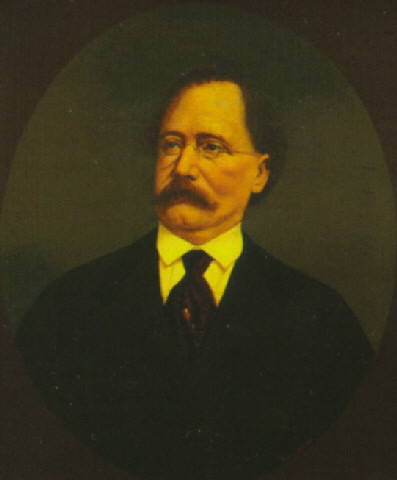
After the war, Levy resumed his career as a lawyer in Natchitoches. During the reorganization of the Democratic Party during the Reconstruction period, Levy remained politically active as evidenced by his attendance at the Democratic Party's 1872 convention in Baltimore as a Louisiana delegate. In April 1873, Levy announed the formation of a law partnership with E.L. Pierson, brother of the wife of Levy's brother, called "Levy & Pierson" (replacing "Pierson & Levy").
E. L. Pierson was a member of the state legislature and was murdered in December 1875 by J.H. Cosgrove, editor of Natchitoches' Vindicator newspaper. ("The difficulty orginated (sic) in a newspaper controversy, in which the epithets of coward, &c, were exchanged. Pierson was a Kelloggite ["radical republican" - DRW], Cosgrove a Democrat." Ouachita Telegraph, Dec. 31, 1875 at http://ftp.rootsweb.com/pub/usgenweb/la/natchito/history/piersonc.txt).
Levy was elected to the 44th Congress (March 1875 to March 1877) as a Democrat. Though he was not renominated for Congress in 1876, Levy spent his "lame duck" months actively involved in the Tilden-Hayes controversy. In the disputed presidential election of 1876, Louisiana was one of five states whose electoral votes were in contention (Florida was another of these states and William Purman played a major part in that controversy). The Louisiana gubernatorial election of November 1876 was similarly contested. Both the Republican and Democratic candidates declared victory. Louisiana’s Republican-controlled board of elections confirmed the Republican candidate as the winner. Levy denounced the actions of the Louisiana board of election before the House on Feb. 20, 1877. The New York Times contended that Levy played a leading part in the compromise that ended Democratic filibustering aimed at preventing the House’s certification of the presidential election in Hayes’ favor. The Times also insisted that Levy was a leader in devising the deal that accepted the Louisana board of election's determination in favor of Hayes’ winning that state's electoral votes in exchange for the recognition of the Democratic candidate as Louisiana's governor. Though historians dispute the existence of a “deal” to settle the election, the Times insisted that Levy’s speech on the floor of the House on March 1, 1877 was proof of such an arrangement. Levy was quoted as speaking in opposition to the Democratic filibuster that "I feel that sound policy and the paramount consideration of the salvation of the State and people of Louisiana require that their Representatives in this House should abstain from a futile attempt to nullify that decision, and thereby postpone the redemption which is essential to their very existence and from which alone they can expect peace and prosperity” (NYT, March 31, 1877). Louisiana's electoral votes were delivered to Hayes and the Democrats took control of Louisiana, effectively ending Reconstruction in that state.
In 1878, Levy formed a law partnership with Daniel C. Scarborough which contined until Levy's appointment in April 1880 by Governer Wiltz as an associate justice of the Louisiana Supreme Court. Levy died in August 14, 1882 at Saratoga Springs, NY at the age of 54. Levy's burial service was held at the Protestant Episcopal Church in Natchitoches on Dec. 11, 1882. Biographical sources indicate that Levy was buried at the American Cemetery in Natchitoches, but extensive indexes of graves at that place do not list his name. His widow, Catherine, died in New Orleans in 1900.
LEVY'S FAMILY
Charles H. Levy was most likely William's younger brother. Born on August 18, 1837, Charles Levy's biography lists him as a Virginia native and the youngest of seven children of John B. Levy, also a Virginian by birth who served in the War of 1812. The father John moved to Natchitoches in 1870, but moved the following year to Longview, Texas where he died in 1877 at the age of 89 (another source says he died on Dec. 29, 1880). Father John's wife, Emeline Butt (unclear if she was the mother of William), also a Virginia native, died in Texas in 1875 at the age of 72. Charles was educated in Portsmouth and entered the U.S. Navy's engineering corps. He resigned from the U.S. Navy in June 1861 and joined the Confederate Navy, being promoted to chief engineer in 1864. At the close of the war, Charles settled in Natchitoches. Like his brother, Charles became in involved in the Democratic Party and was elected justice of the peace in 1879. Charles and his wife, Emily Pierson, were members of the Episcopal Church and had six children, including one son named William M. Another brother, Richard Butt Levy Sr., was a trustee of the Presbytarian Church in Longview Texas and served as Texas Secretary of State for a number of years. Richard died in 1918.
Thursday, October 19, 2006
William Mallory Levy Biography: Part II - Civil War
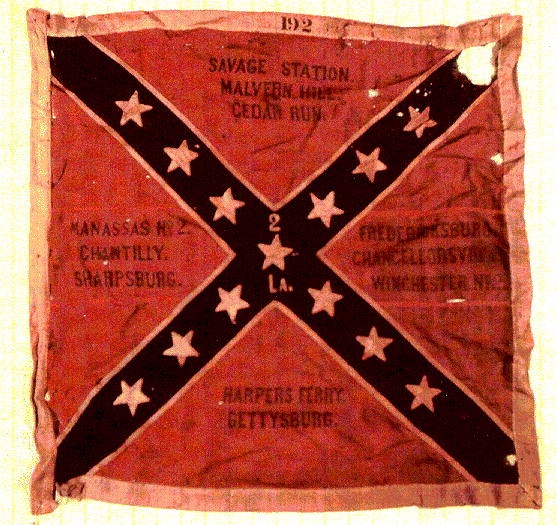
Robert Rosen covers Levy's military record extensively in his Jewish Confederates. Rosen, however, provides no evidence that Levy was actually Jewish. In April 1861, Levy was named captain of the LeCompte Guards from Natchitoches which became Co. A of the 2nd Louisiana Infantry (Louisiana Zouaves). The fact that Levy had military experience from his Mexican War experience certainly made him an obvious choice as an officer. Levy's unit was immediately sent to Virginia. As soon as his men arrived East, Levy sent a letter back to Natchitoches beseeching his fellow townsmen to provide funds for warm clothing for his men. Levy took the opportunity to visit his college town of Williamsburg. In July he was promoted to colonel. One of his soldiers wrote back to home to his parents that he thought the unit's new colonel, "Leavey," to be "the best colonel we have had" (W.W. Posey to Dear parents, July 30, 1861). Levy reported on his participation in the Battle of Lee's Mill in April 1862 in a letter to his wife, writing that "the cause is a righteous one and God is on our side and will watch over us." (Levy to My dearest wife, April 23, 1862). Major General Magruder cited Levy for "judgement, courage, and high soldierly qualities of conduct and arrangements, which I desire specially to commend" (Rosen, p. 105). Levy was not reelected to lead his unit and sought a field command elsewhere. Failing in this effort, he obtained an appointment as a major in the adjutant general's department which was confirmed by the Confederate Congress in July 1862. He became a member of Maj. Gen. Richard Taylor's staff in Louisiana and his closest aide (Rosen, p. 106). Levy had served in the division of Taylor's father, Zachary, in the Mexican War. Richard Taylor described Levy as "an officer of capacity and experience." One of Levy's roles was to represent Taylor's army in negotiating prisoner exchanges with the Union army leadership. During the summer of 1863, Levy was discussed as a candidate for the Confederate Congress from Lousiana's 5th Congressional district, but did not receive the nomination. Following Taylor to his next command, Levy was promoted to lieutenant colonel in Oct. 1864 and named Taylor's inspector general. He accompanied Taylor when he negotiated the surrender of the last Confederate troops operating east of the Mississippi in early May 1865.
[Flag image: regimental flag of 2d Louisiana from http://www.rootsweb.com/~ladesoto/second.html]
Wednesday, October 18, 2006
William Mallory Levy (1827-1882): The Biography- Part I
My research into the life of William Mallory Levy has reached a dead end. Despite inquiries in Virginia and Louisiana, I cannot confirm whether or not Levy was Jewish. Nevertheless, here is a brief biography of controversial nineteenth century figure.
VIRGINIA PERIOD
Levy was born in Isle of Wight, Virginia on October 30, 1827. In 1844 he graduated from William & Mary College where he studied law. In May 1846, Levy joined the Portsmouth Company of Volunteers, known as Co. F of the First Regiment of Virginia Volunteers, and served as a 2nd Lieutenant in the Mexican War. A letter written by Levy in Mexico in July 1847 sent home to Portsmouth was sold at auction in 2003. Levy wrote "What a changeful life this is! I am on the battlefield of Buena Vista, you at home in the midst of friends. I supposed the damned war will not last always. I wish to God we could have a good fight and be done with it, for I pledge you my word I am getting devilish tired of Mexico." Soon after his unit's return from Mexico in August 1848, Levy announced that he had assumed the "editorial management" of Portsmouth's Chronicle and Old Dominion newspaper. At the same time, Levy publicly declared his change from the Whig to the Democratic Party. Explaining his switch, Levy stated that in "his connection with the army, in capacity of an officer..., he was convinced by a conviction of duty to his country, and the honest belief of the practical adaptation of measures entertained and avowed by the Democratic party to the good of the country, and to the proper and just administration of the government.." In January 1849, only four months after becoming editor, Levy resigned from management of the Chronicle and Old Dominion. For a time, until June 1849, he served as the second clerk for the Navy Storekeeper at Portsmouth. Around 1850, he married Catherine and they had a daughter Katie. About the same time, Levy was admitted to the Virginia bar and opened a law office in Portsmouth. Levy became active in local politics, serving on a Committee of Vigilance and as clerk of Portsmouth upon its incorporation as a town early in 1852.
ANTE-BELLUM LOUISIANA
In 1852, the family moved to Natchitoches, Louisiana where Levy worked as a lawyer and editor of the Natchitoches Chronicle. In 1859, he was elected to the Louisiana state legislature. The following year, Levy opened the firm of Levy & Dranguet with Natchitoches attorney Charles F. Dranguet. Perhaps indicating Levy's status in Lousiana's Democratic Party, Levy was named a presidential elector for Breckenridge's pro-slavery, National (southern) Democrat ticket in 1860. Prior to the outbreak of the war, Levy became friendly with William Tecumsah Sherman who was serving as superintendant of the Military Acadmey of Louisiana located in an adjacent parish.
VIRGINIA PERIOD
Levy was born in Isle of Wight, Virginia on October 30, 1827. In 1844 he graduated from William & Mary College where he studied law. In May 1846, Levy joined the Portsmouth Company of Volunteers, known as Co. F of the First Regiment of Virginia Volunteers, and served as a 2nd Lieutenant in the Mexican War. A letter written by Levy in Mexico in July 1847 sent home to Portsmouth was sold at auction in 2003. Levy wrote "What a changeful life this is! I am on the battlefield of Buena Vista, you at home in the midst of friends. I supposed the damned war will not last always. I wish to God we could have a good fight and be done with it, for I pledge you my word I am getting devilish tired of Mexico." Soon after his unit's return from Mexico in August 1848, Levy announced that he had assumed the "editorial management" of Portsmouth's Chronicle and Old Dominion newspaper. At the same time, Levy publicly declared his change from the Whig to the Democratic Party. Explaining his switch, Levy stated that in "his connection with the army, in capacity of an officer..., he was convinced by a conviction of duty to his country, and the honest belief of the practical adaptation of measures entertained and avowed by the Democratic party to the good of the country, and to the proper and just administration of the government.." In January 1849, only four months after becoming editor, Levy resigned from management of the Chronicle and Old Dominion. For a time, until June 1849, he served as the second clerk for the Navy Storekeeper at Portsmouth. Around 1850, he married Catherine and they had a daughter Katie. About the same time, Levy was admitted to the Virginia bar and opened a law office in Portsmouth. Levy became active in local politics, serving on a Committee of Vigilance and as clerk of Portsmouth upon its incorporation as a town early in 1852.
ANTE-BELLUM LOUISIANA
In 1852, the family moved to Natchitoches, Louisiana where Levy worked as a lawyer and editor of the Natchitoches Chronicle. In 1859, he was elected to the Louisiana state legislature. The following year, Levy opened the firm of Levy & Dranguet with Natchitoches attorney Charles F. Dranguet. Perhaps indicating Levy's status in Lousiana's Democratic Party, Levy was named a presidential elector for Breckenridge's pro-slavery, National (southern) Democrat ticket in 1860. Prior to the outbreak of the war, Levy became friendly with William Tecumsah Sherman who was serving as superintendant of the Military Acadmey of Louisiana located in an adjacent parish.
Saturday, August 19, 2006
Ferdinand Fleishman: Tragedy in Civil War Era Cincinnati
A previous post aluded to the tragic end of Ferdinand Fleishman. Ferdinand left Quincy, FL during the war. The Israelite told his story in its July 22, 1864 issue:
"CINCINNATI - Some five or six weeks ago, Fred. A. Fleischman, a German, of the Israelitish faith, twenty-eight years of age, arrived in this city as a refugee from Florida. He took the oath of allegience at Key West, January 28, 1864. He has been boarding at the Sylvester House, but Friday evening went to the residence of Mr. Oehlman on East Fifth street, and retired to his room at an early hour. In the morning his door was found locked, and no answer was made to knocking on the door, or repeated calls. Finally the door was forced upon, and Fleischman found lying on the floor, with a pillow under his head, his right arm bent over the shoulder, almost in contact with the temple, and beneath it a pistol, which had fallen from his hand after the discharge. The pistol is a small, singled-barreled breach-loader, partially covered with blood, and had been discharged, portions of the catridge still remaining in the barrell. He had placed himself in an easy position, and must have died instantly. As additional evidence that he had commited suicide designedly, he left on a sheet of fools-cap a note to Mr. Oehlman, as follows: "Mr. Oehlman - My clothes are at Mr. Moore's. You will find $31 in my pants pocket. Let my wife know. Ferdinand." Fleischman was suffering from a depression of spirit, induced partly by the expected arrival of his wife and four children, from Quincey, Florida, where he resided and owned considerable property, and partly by his cold reception on his arrival in New York, by those whose duty and pleasure it should have been to give him succor and extend to him the warm hand of friendship in this his hour of adversity. We most heartily sympathize with the bereaved family, and hope that the God of Israel will give them consolation."
Ferdinand had been mentioned in "The Israelite" a few years earlier. H. Loewenthal sent the paper a report, published on Dec. 21, 1860, of his visit to Florida where had had been called as a mohel. Loewenthal performed the brit mila for Ferdinand Fleishman's son in Quincy and reported that "I must confess that I never met with a more liberal set of men and women than I found in those I there become acquainted with. I am only sorry my time was too brief and my heart too wounded on account of my too recent affliction - you know I lost my wife lately."
Ferdinand was born about 1835 in Bavaria and was listed as a merchant in the 1860 census. He also worked for a while at the Aspalaga post office in 1859. Ferdinand and Fannie Davis, born in the late 1830s in Baden, Germany, were married in Gadsden County on Nov. 7, 1859. Fannie was listed in the 1860 census as having a fancy goods store. Ferdinand and Fannie had four children, Albert and Mary, both born about 1860, and Joseph and Bertha, both born about two years later. The child brought into the convenant by Loewenthal was certainly Albert. The 1860 census lists Fanny and Ferdinand with a two year old child, Samuel. Unlike Fannie's four children with Ferdinand, the 1870 census lists Samuel's last name as Davis. It is unclear whether Samuel is a child of Fannie's from a previous marriage or the child of a relative. The 1860 Gadsden census listed a S.M. Davis, born about 1838, clerk from Hessia Germany and the 1850 Gadsden census listed a Lewis Davis, a peddler born about 1820 in Germany. The connection between these people is unclear.
As reported in a previous post, Ferdinand seems to have found a substitute to serve in Florida's 6th Infantry Regiment, probably in mid-1862 when Simon and Benjamin enlisted and set off for the North in late 1863.
A few years after Ferdinand's suicide, Fannie married Morris Warendolff, a native of Prussia. Fannie and Morris were living in Gadsden County as of the 1870 census. This census lists two young children: Alexander (age 3) and Bernhard (age 1), both born in New Jersey. It is unclear whether these were Fannie's own offspring or Morris's from a previous marriage. The Israelite article describing Ferdinand's suicide reports the impending arrival of Fannie and her four children, suggesting that she may have gone North after all in 1864 and that the fifth child, Samuel, was not hers. Perhaps she met Morris in the North and married in New Jersey and had two children there. It is impossible to determine.
By 1880, Fannie was living in Brooklyn, with Samuel (now named Warndolff), her four children named Fleishman, the two Warndolff boys born in New Jersey, and three more Warendolff children who are defintiely Fannie's: Victor (born Florida 1871), Herman (born New York 1874) and Edward (born New York 1876). Morris is not listed with the family - presumably he was dead. It seems that Fannie later married a individual named Manheimer.
ADDITIONAL INFORMATION POSTED AUG. 31, 2009: Like Ferdinand, Samuel Fleishman had also lived in Quincy before moving to Marianna. In the Tallahasee Floridian & Journal dated Jan. 26 1856, the following announcement is found:
"Co-Partnership
PHILIP M. FLEISHMAN and FERDINAND A. FLEISHMAN, under the firm of P. & F. Fleishman, having purchased the entire stock of S. M. Fleishman, will continue the business at the old stand, and respectfully solicit a continuance of the patronage of their friends and the public in general.
P. & F. FLEISHMAN
_____
The subscriber having sold his entire stock to P. & F. Fleishman, would respectfully solicit in their behalf, a continuance of that favor so liberally bestowed on him.
S. M. FLEISHMAN
Quincy, Fla. Jan 1, 1856
"CINCINNATI - Some five or six weeks ago, Fred. A. Fleischman, a German, of the Israelitish faith, twenty-eight years of age, arrived in this city as a refugee from Florida. He took the oath of allegience at Key West, January 28, 1864. He has been boarding at the Sylvester House, but Friday evening went to the residence of Mr. Oehlman on East Fifth street, and retired to his room at an early hour. In the morning his door was found locked, and no answer was made to knocking on the door, or repeated calls. Finally the door was forced upon, and Fleischman found lying on the floor, with a pillow under his head, his right arm bent over the shoulder, almost in contact with the temple, and beneath it a pistol, which had fallen from his hand after the discharge. The pistol is a small, singled-barreled breach-loader, partially covered with blood, and had been discharged, portions of the catridge still remaining in the barrell. He had placed himself in an easy position, and must have died instantly. As additional evidence that he had commited suicide designedly, he left on a sheet of fools-cap a note to Mr. Oehlman, as follows: "Mr. Oehlman - My clothes are at Mr. Moore's. You will find $31 in my pants pocket. Let my wife know. Ferdinand." Fleischman was suffering from a depression of spirit, induced partly by the expected arrival of his wife and four children, from Quincey, Florida, where he resided and owned considerable property, and partly by his cold reception on his arrival in New York, by those whose duty and pleasure it should have been to give him succor and extend to him the warm hand of friendship in this his hour of adversity. We most heartily sympathize with the bereaved family, and hope that the God of Israel will give them consolation."
Ferdinand had been mentioned in "The Israelite" a few years earlier. H. Loewenthal sent the paper a report, published on Dec. 21, 1860, of his visit to Florida where had had been called as a mohel. Loewenthal performed the brit mila for Ferdinand Fleishman's son in Quincy and reported that "I must confess that I never met with a more liberal set of men and women than I found in those I there become acquainted with. I am only sorry my time was too brief and my heart too wounded on account of my too recent affliction - you know I lost my wife lately."
Ferdinand was born about 1835 in Bavaria and was listed as a merchant in the 1860 census. He also worked for a while at the Aspalaga post office in 1859. Ferdinand and Fannie Davis, born in the late 1830s in Baden, Germany, were married in Gadsden County on Nov. 7, 1859. Fannie was listed in the 1860 census as having a fancy goods store. Ferdinand and Fannie had four children, Albert and Mary, both born about 1860, and Joseph and Bertha, both born about two years later. The child brought into the convenant by Loewenthal was certainly Albert. The 1860 census lists Fanny and Ferdinand with a two year old child, Samuel. Unlike Fannie's four children with Ferdinand, the 1870 census lists Samuel's last name as Davis. It is unclear whether Samuel is a child of Fannie's from a previous marriage or the child of a relative. The 1860 Gadsden census listed a S.M. Davis, born about 1838, clerk from Hessia Germany and the 1850 Gadsden census listed a Lewis Davis, a peddler born about 1820 in Germany. The connection between these people is unclear.
As reported in a previous post, Ferdinand seems to have found a substitute to serve in Florida's 6th Infantry Regiment, probably in mid-1862 when Simon and Benjamin enlisted and set off for the North in late 1863.
A few years after Ferdinand's suicide, Fannie married Morris Warendolff, a native of Prussia. Fannie and Morris were living in Gadsden County as of the 1870 census. This census lists two young children: Alexander (age 3) and Bernhard (age 1), both born in New Jersey. It is unclear whether these were Fannie's own offspring or Morris's from a previous marriage. The Israelite article describing Ferdinand's suicide reports the impending arrival of Fannie and her four children, suggesting that she may have gone North after all in 1864 and that the fifth child, Samuel, was not hers. Perhaps she met Morris in the North and married in New Jersey and had two children there. It is impossible to determine.
By 1880, Fannie was living in Brooklyn, with Samuel (now named Warndolff), her four children named Fleishman, the two Warndolff boys born in New Jersey, and three more Warendolff children who are defintiely Fannie's: Victor (born Florida 1871), Herman (born New York 1874) and Edward (born New York 1876). Morris is not listed with the family - presumably he was dead. It seems that Fannie later married a individual named Manheimer.
ADDITIONAL INFORMATION POSTED AUG. 31, 2009: Like Ferdinand, Samuel Fleishman had also lived in Quincy before moving to Marianna. In the Tallahasee Floridian & Journal dated Jan. 26 1856, the following announcement is found:
"Co-Partnership
PHILIP M. FLEISHMAN and FERDINAND A. FLEISHMAN, under the firm of P. & F. Fleishman, having purchased the entire stock of S. M. Fleishman, will continue the business at the old stand, and respectfully solicit a continuance of the patronage of their friends and the public in general.
P. & F. FLEISHMAN
_____
The subscriber having sold his entire stock to P. & F. Fleishman, would respectfully solicit in their behalf, a continuance of that favor so liberally bestowed on him.
S. M. FLEISHMAN
Quincy, Fla. Jan 1, 1856
Friday, August 18, 2006
Charles Memorial Hamilton: The Military Record
I glossed over Hamilton's military service in the FHQ paper. Here is a more complete account.
1861
May: joins Co. A, 5 Regiment Pennsylvania Reserve Infantry as a private at Jersey Shore, PA
June: Skirmish at New Creek, WV
1862
June - July: Peninsula campaign: Battles of Mechanicsville, Gaines Mill, Charles City Cross Roads or White Oak Swamp, Malvern Hill
July: promoted to corporal
Sept: Battles of South Mountain and Antietam
Nov.: CMH courtmartialed, charged with "absence without authority from company while on picket duty." CMH was arrested by a Union army patrol outside of the picket lines near Rappahannock Station on Nov. 12, 1862. The Cavalry officer who had arrested CMH testified that he found CMH and another man outside of less than a mile beyond the picket lines at a house near the river with another man "carrying off some fresh pork." Col. Fisher of CMH's regiment testified that he knew "of no young man possessed of a better character." CMH's officers stated for the defense that they had given CMH permission to visit a nearby house to buy bread. CMH was found not guilty of the charges against him.
Dec. 13, 1862: Battle of Fredericksburg: wounded (fracture of tibia caused by gunshot), left on field for 5 days, captured and taken to Richmond
Dec. 1862 - Jan 1863: Imprisoned ("enjoyed the storied feliciities") at Richmond's Libbey Prison
1863:
Jan.: imprisoned in Richmond and exchanged
Jan - April: U.S. Hospital, Annapolis MD (receives 20 days leave of absence to PA home where fell ill with "typhus fever")
March: Promoted to Sargeant
May - Aug.: U.S. Hospital in Philadelphia (typhus fever and treatment of leg wounded)
Sept.: Ordered Invalid Corps to report as guard to the Provost Marshall's office, Philadelphia
Oct.: Discharged by order to the War Dept. to accept a commission as 2nd Lieut in Invalid Corps (Co. B, 9 Veteran Reserve Corp) on account of disability: fracture of tibia
Nov.; VRC unit stationed in Washington: CMH "detailed to commant the Guard, and take charge of the Aqueduct Bridge"
1864
Jan.: Takes charge of Washington's Chain Bridge
Feb. - Apri: detalied as Judge Advocate of a General Court Martial
April 1864 - Dec.: detailed on General Martindale's staff as assistant Pass Officer, also Transportation Officer
Dec.: Assigned as Post Adjutant as Forrest Hall Prison in Georgetown
1865 and later
Jan.: Transferred to to Central Guard House prison
March: CMH reassigned to his regiment
April: Granted leave to accompany his father to recover the body of his brother John killed at Peterburg; detailed back to the Central Guard House prison, returned to his regiment and then assigned to command the Guard at Secy Seward's residence
June: assigned to transport Burnett of the Confederate Congress to the care of Maj Gen'l Palmer in Kentucky
July - Oct.: detalailed as Judge Advocate General Court Martial
Oct: ordered to report with detachment of 33 soldiers to the Freedmen's Bureau sub asst commission at St. Mary's Co., MD
Nov.: returned to his regiment and elects to remain in U.S. service
June 1867: promoted by brevet to 1st. Lieut and Captain to date from March 13, 1865 for "faithful and meritorious services during the war"
Jan. 1868: Honorably discharged from military service
1861
May: joins Co. A, 5 Regiment Pennsylvania Reserve Infantry as a private at Jersey Shore, PA
June: Skirmish at New Creek, WV
1862
June - July: Peninsula campaign: Battles of Mechanicsville, Gaines Mill, Charles City Cross Roads or White Oak Swamp, Malvern Hill
July: promoted to corporal
Sept: Battles of South Mountain and Antietam
Nov.: CMH courtmartialed, charged with "absence without authority from company while on picket duty." CMH was arrested by a Union army patrol outside of the picket lines near Rappahannock Station on Nov. 12, 1862. The Cavalry officer who had arrested CMH testified that he found CMH and another man outside of less than a mile beyond the picket lines at a house near the river with another man "carrying off some fresh pork." Col. Fisher of CMH's regiment testified that he knew "of no young man possessed of a better character." CMH's officers stated for the defense that they had given CMH permission to visit a nearby house to buy bread. CMH was found not guilty of the charges against him.
Dec. 13, 1862: Battle of Fredericksburg: wounded (fracture of tibia caused by gunshot), left on field for 5 days, captured and taken to Richmond
Dec. 1862 - Jan 1863: Imprisoned ("enjoyed the storied feliciities") at Richmond's Libbey Prison
1863:
Jan.: imprisoned in Richmond and exchanged
Jan - April: U.S. Hospital, Annapolis MD (receives 20 days leave of absence to PA home where fell ill with "typhus fever")
March: Promoted to Sargeant
May - Aug.: U.S. Hospital in Philadelphia (typhus fever and treatment of leg wounded)
Sept.: Ordered Invalid Corps to report as guard to the Provost Marshall's office, Philadelphia
Oct.: Discharged by order to the War Dept. to accept a commission as 2nd Lieut in Invalid Corps (Co. B, 9 Veteran Reserve Corp) on account of disability: fracture of tibia
Nov.; VRC unit stationed in Washington: CMH "detailed to commant the Guard, and take charge of the Aqueduct Bridge"
1864
Jan.: Takes charge of Washington's Chain Bridge
Feb. - Apri: detalied as Judge Advocate of a General Court Martial
April 1864 - Dec.: detailed on General Martindale's staff as assistant Pass Officer, also Transportation Officer
Dec.: Assigned as Post Adjutant as Forrest Hall Prison in Georgetown
1865 and later
Jan.: Transferred to to Central Guard House prison
March: CMH reassigned to his regiment
April: Granted leave to accompany his father to recover the body of his brother John killed at Peterburg; detailed back to the Central Guard House prison, returned to his regiment and then assigned to command the Guard at Secy Seward's residence
June: assigned to transport Burnett of the Confederate Congress to the care of Maj Gen'l Palmer in Kentucky
July - Oct.: detalailed as Judge Advocate General Court Martial
Oct: ordered to report with detachment of 33 soldiers to the Freedmen's Bureau sub asst commission at St. Mary's Co., MD
Nov.: returned to his regiment and elects to remain in U.S. service
June 1867: promoted by brevet to 1st. Lieut and Captain to date from March 13, 1865 for "faithful and meritorious services during the war"
Jan. 1868: Honorably discharged from military service
Thursday, August 17, 2006
The Fighting Fleishmans of Gadsden County, FL: Forgotten Jewish Confederates

The Simon Wolf index is a list of Jewish Civil War veterans originally compiled in the 19th century. The index does not include any of the Florida Fleishmans. Benjamin and Simon Fleishman served in the 6th Regiment of the Florida Infantry. Simon, born Feb. 21, 1840, was listed in the 1860 census as living with Samuel Fleishman's brother Philip. Like Philip and Benjamin, Simon was a native of Bavaria - possibly he was another brother, but more likely a cousin since he was as much as 18 years younger than Samuel. Benjamin was listed in the census as boarding with the family of Ferdinand and Fannie Fleishman and their child Samuel. Born about 1832, Benjamin was also, like Ferdinand (born about 1835), a Bavarian. As discussed in the Fleishman paper in the SHJ Journal, Philip found a substitute to serve in the Confederate army in his place. Ferdinand is listed under the 6th Regiment, but apparently never served and left for the North where, as recounted in The Israelite, he committed suicide under miserable, lonely circumstances in July 1864.
Service records of Simon and Benjamin Fleishman:
SIMON FLEISHMAN: enlisted in Quincy on March 12, 1862 as a private in Co. B of the 6th Infantry FL. He was captured at Missionary Ridge (TN) on Nov. 25, 1863 and confined in the Union p.o.w. camp at Rock Island, IL on Dec. 1, 1863. Simon was released upon swearing an oath of allegience on June 22, 1865. He is described as 5'7.5", with "fresh skin, dark hair, hazel eyes." Simon was the only of the Jackson-Gadsden Fleishmans to remain in Florida long after the War. He was an "active businessman in Quincy in the post-war period" and a building on the west corner of the south side of Quincy's town square was known as the "old Simon Fleishman building." In 1907, Simon applied for and received a Confederate army service pension from the state of Florida. It is not clear that he ever married.
[UPDATE AUG. 23, 2010: Fate of Simon Fleishman solved - Born in 1840, Simon "Fleischman" was buried in Chicago in 1908 - See: http://genealogytrails.com/ill/rebelsoldiersa-g.html ]
BENJAMIN FLEISHMAN: enlisted at Chattahoochee on June 14, 1862 as a private in Co. B of the 6th Infantry, FL. He was wounded at Chicamauga, GA on Sept. 20, 1863 and captured at Nashville, TN on Dec. 16, 1864. Benjamin was confined at Camp Chase, OH on Dec. 20, 1864 and was released after swearing the oath of allegience on May 11, 1865. Benjamin had some business interests in Jackson County after the war and briefly served as county treasurer. He died in the mid-1870s.
Record of the Florida 6th Florida Volunteer Infantry;
"The Regiment was formally organized on April 14, 1862 with the election of officers...After several months of training at Chattahoochee, the regiment was ordered to report to Knoxville, Tennessee....The 6th and 7th Regiments reinforced General [Edmund Kirby] Smith's army before the great Confederate invasion of Kentucky during the late summer of 1862. Moving fast out of Knoxville, through the Cumberland Gap, General Smith captured Frankfort and Lexington and threatened Cincinnati before his offensive ran out of steam. Many of the men in the 6th Florida weakened by the vigorous marching, poor food, and foul water, were laid low by disease... During the invasion of Kentucky the 6th Florida did not participate in any major engagements. For the next year the regiment was mainly used on guard and garrison duty in East Tennessee. The Unionist living in the mountains were a constant threat to the railroad that ran from Chattanooga, through Knoxville, to Virginia. The duty of guarding the railroad was dull but necessary. The Union offensive in Tennessee during the summer of 1863 changed this monotonous existence of the 6th Florida. The Confederates were forced to evacuate Knoxville, their small force there falling back to join General Braxton Bragg's Army of Tennessee, which had been forced out of Chattanooga. This combined force retreated a few miles south to make a stand near Chickamauga Creek. At Chickamauga the 6th Florida had its baptism of fire. After Chickamauga all of the Florida regiments in the Army of Tennessee were formed into one brigade... This new brigade was stationed near the center of the Confederate line at the Battle of Missionary Ridge, and did not retire from the ridge until ordered to do so. After spending the winter at Dalton, Georgia, the 6th Florida was nearly constantly engaged in battle during the Atlanta campaign, suffering heavy casualties.... A much reduced regiment emerged from the Atlanta Campaign to take part in Hood's disasterous Tennessee invasion in late 1864. At the Battle of Nashville, the Florida Brigade, as well as the rest of the Confederate army, was virtually destroyed. The survivors retreated back to Mississippi. Here what was left of the 6th Florida was consolidated with the survivors from the other Florida regiments in the Army of Tennessee to form one regiment. This 1st (Consolidated) Florida Regiment was sent east to join Joe Johnston's army in North Carolina. Here they were finally surrendered to General Sherman's army at Greensboro, N. C. on April 26, 1865, three years after their violent adventure." [Posted by MelindaWebb Russ at http://history-sites.com/mb/cw/flcwmb/index.cgi?noframes;read=184]
Simon and Benjamin have both been added to the Jewish Civil War service database at http://www.jewish-history.com/database.html
[Flag image from http://www.florida-scv.org ]
Tuesday, August 15, 2006
Samuel Fleishman in New York
While Samuel spent at least a few years during the war in New York CIty, he also maintained a residence there after he returned to Marianna. Samuel appears in the 1868-1869 New York City Directory with a residence at 202 E. 27th street and a place of employment at 39 Third Ave. The Third Avenue address, of course, was the site Altman dry goods store after Morris and Benjamin moved uptown from the Bowery a few years after the death of their father, Phllip. Samuel is also listed in the 1869-1870 directory with a residence now at 252 E. 10th Street. The 10th street address was also the home of Samuel's widowed mother-in-law Celia Altman. By this time, the Altman store had expanded to include 43 Third Ave. The following year, Sophia and her children had moved to 318 E. 49th Street which they shared with Celia. Phlip Fleishman was living nearby at 318 E. 49th Street.
Monday, August 14, 2006
For our Jackson County, FL readers - Fleishman's Campbellton property
The Florida state archives contain several deeds transferring a property in Campbellton involving the Fleishman family. On Feb. 2, 1860, Samuel Fleishman purchased from B.A. Hinson for $1,250 a two acre property containing a "store-house and dwelling." The property "lying at the commencement of the Geneva and Orange hill roads" ran 140 yards South and 70 yards West. On Feb. 8, 1862, Samuel deeded this property to his wife Sophia for the sum of $2,500. Sophia transferred to this property to Samuel's brother Phillip Fleishman of Gadsden County on Nov. 29, 1864 for $2,500. Presumably Samuel transferred this property to Sophia when he contemplated leaving the South. The reason for Sophia's transfer to Philip so subject to similar speculation. Perhaps she contemplated leaving the South late in the War? If any readers are familiar with Campbellton, is this property identifiable?
Saturday, July 22, 2006
CHRONICLE OF JACKSON COUNTY, FL RACIAL VIOLENCE, PART IV: 1868
1868 (January through June)
Hamilton left Jackson County in January 1868 and was succeeded by Purman. Purman had become deeply involved in Florida politics, spent much time out of the area, and left the Bureau in the summer after being elected to the state senate. At the beginning of the year, Purman observed that “a stronger spirit of hostility exists against the colored people to-day than ever before” and attributed that hostility to the freedmen’s “immovable position on Republican principles.” 1868 finds the first mention of the KKK. Purman’s replacement, John Dickinson, didn’t dwell on violent incidents in his reports. The following year, of course, assassination and mayhem would overwhelm the county and Dickinson would provide the most detailed eyewtiness report.
JANUARY
In the vicinity of Greenwood, Mr. Grey refused to deliver up a colored child, on the order of the Bureau “to its rightful guardians, and expelling with the flourish of firearms the holder of the order from the premises. Enraged at this treatment of his authorized demand, the freedman collected a band of half-a-dozen armed followers, and proceeding to the house of Mr. Grey obtained possession of the child without the exercise of any violence but of course by the force of the menace.” (WJP to AHJ, 1/4/68)
APRIL
Purman writes that the KKK has sent him“several very unfriendly notices” and that from assassination “no one is protected save by an overruling Providence.” (WJP to AHJ 4/30/68)
MAY
U.S. 7th Inf. troops leave Marianna (Marianna Courier in Weekly Floridian 5/19/68)
May 22nd, “Mr E. W. Mooring, a limb of the “chivalry”, and a man of hot and rebellious character, was met on the public sidewalk by a colored woman who accidentally in passing brushed his knee with her hoopskirt, whereupon this valorous male struck her two severe blows in her face, and raved about like a madman. A high excitement was instantly produced in the colored community, and after much difficulty in finding a Justice of the Peace, which petty functionary was at last found in the outskirts of the county, Mr. Mooring was arrested for assault and battery. After a shameful and malicious judicial farce for two days before a nincompoop of a country squire, he was adjudged not guilty, and was accordingly not committed for trial before Court.”
May 23rd,: REDDICK BLUNT freedman, was killed near Marianna. Blunt “was under arrest for hog-stealing, and while in the custody of Constable Street and two colored assistants, for conveyance to the country jail, it is said he attempted to escape, and ran about half-a-mile from the road, through a heavy thicket in the woods, where he was overtaken and killed by a two charges from a shot-gun, in the right breast. A peculiar feature in this case is, that Constable Street made no pursuit at all, but remained in the road, while the colored assistants alone gave chase, and one only a short distance, while the third who was alone and shot the prisoner in the front part of the body, was a brother of the woman from whom the hog was stolen …this murder was unnecessary and unjustifiable.”
“Murder, homicide and assassination have long been so common in the experience of this section of the country, that their terrible occurrence scarely rises to the importance of a subject for sober conversation, and instead of producing horror and indignation in the moral faculties of the community, it excites only reckless comments and a fashionable spirit of bravado.” (WJP to AHJ, 5/30/68)
JUNE
June 4th: “Lot Wood, a vagabond whiteman, assaulted with a knife and ripped out the entrails of JAMES DONALD, an old freedman. There was no open provocation for this murderous deed, and the old man died in a week afterwards. Wood has escaped, and is skulking in the piney woods on the borders of the State.”
In Washington County: “Upon the vague and even unreasonable suspicion that James Bellamy, a freedboy, stole $75, he was carried out on the bay where he was tied to an anchor and plunged into the water for the purpose of extorting a confession of guilt from him, and in spite of all his frightful and prayerful asservations he was taken at 12 o’clock at night into the woods and hung to a tree, though all the while asserting his innocence, until at last half dead with fright and suffering, he was released to find his way back in the darkness as well as he could.”
“On the plantation of John Pitts, near Marianna, three colored women were wounded with fine bird shot, for the offense of merely drawing water from the well after being ordered to desist, while this same well always supplied the premises and quarters with water, and is the only one in the vicinity. One woman was quite severely wounded. All this was done for the unjust purpose of driving the hands off the plantation, in which attempt the Bureau several times restrained the employer.” (WJP to AHJ, 6/30/68)
Hamilton left Jackson County in January 1868 and was succeeded by Purman. Purman had become deeply involved in Florida politics, spent much time out of the area, and left the Bureau in the summer after being elected to the state senate. At the beginning of the year, Purman observed that “a stronger spirit of hostility exists against the colored people to-day than ever before” and attributed that hostility to the freedmen’s “immovable position on Republican principles.” 1868 finds the first mention of the KKK. Purman’s replacement, John Dickinson, didn’t dwell on violent incidents in his reports. The following year, of course, assassination and mayhem would overwhelm the county and Dickinson would provide the most detailed eyewtiness report.
JANUARY
In the vicinity of Greenwood, Mr. Grey refused to deliver up a colored child, on the order of the Bureau “to its rightful guardians, and expelling with the flourish of firearms the holder of the order from the premises. Enraged at this treatment of his authorized demand, the freedman collected a band of half-a-dozen armed followers, and proceeding to the house of Mr. Grey obtained possession of the child without the exercise of any violence but of course by the force of the menace.” (WJP to AHJ, 1/4/68)
APRIL
Purman writes that the KKK has sent him“several very unfriendly notices” and that from assassination “no one is protected save by an overruling Providence.” (WJP to AHJ 4/30/68)
MAY
U.S. 7th Inf. troops leave Marianna (Marianna Courier in Weekly Floridian 5/19/68)
May 22nd, “Mr E. W. Mooring, a limb of the “chivalry”, and a man of hot and rebellious character, was met on the public sidewalk by a colored woman who accidentally in passing brushed his knee with her hoopskirt, whereupon this valorous male struck her two severe blows in her face, and raved about like a madman. A high excitement was instantly produced in the colored community, and after much difficulty in finding a Justice of the Peace, which petty functionary was at last found in the outskirts of the county, Mr. Mooring was arrested for assault and battery. After a shameful and malicious judicial farce for two days before a nincompoop of a country squire, he was adjudged not guilty, and was accordingly not committed for trial before Court.”
May 23rd,: REDDICK BLUNT freedman, was killed near Marianna. Blunt “was under arrest for hog-stealing, and while in the custody of Constable Street and two colored assistants, for conveyance to the country jail, it is said he attempted to escape, and ran about half-a-mile from the road, through a heavy thicket in the woods, where he was overtaken and killed by a two charges from a shot-gun, in the right breast. A peculiar feature in this case is, that Constable Street made no pursuit at all, but remained in the road, while the colored assistants alone gave chase, and one only a short distance, while the third who was alone and shot the prisoner in the front part of the body, was a brother of the woman from whom the hog was stolen …this murder was unnecessary and unjustifiable.”
“Murder, homicide and assassination have long been so common in the experience of this section of the country, that their terrible occurrence scarely rises to the importance of a subject for sober conversation, and instead of producing horror and indignation in the moral faculties of the community, it excites only reckless comments and a fashionable spirit of bravado.” (WJP to AHJ, 5/30/68)
JUNE
June 4th: “Lot Wood, a vagabond whiteman, assaulted with a knife and ripped out the entrails of JAMES DONALD, an old freedman. There was no open provocation for this murderous deed, and the old man died in a week afterwards. Wood has escaped, and is skulking in the piney woods on the borders of the State.”
In Washington County: “Upon the vague and even unreasonable suspicion that James Bellamy, a freedboy, stole $75, he was carried out on the bay where he was tied to an anchor and plunged into the water for the purpose of extorting a confession of guilt from him, and in spite of all his frightful and prayerful asservations he was taken at 12 o’clock at night into the woods and hung to a tree, though all the while asserting his innocence, until at last half dead with fright and suffering, he was released to find his way back in the darkness as well as he could.”
“On the plantation of John Pitts, near Marianna, three colored women were wounded with fine bird shot, for the offense of merely drawing water from the well after being ordered to desist, while this same well always supplied the premises and quarters with water, and is the only one in the vicinity. One woman was quite severely wounded. All this was done for the unjust purpose of driving the hands off the plantation, in which attempt the Bureau several times restrained the employer.” (WJP to AHJ, 6/30/68)
Thursday, July 20, 2006
CHRONICLE OF JACKSON COUNTY, FL RACIAL VIOLENCE, PART III: 1867
1867
The murder rate remained low in 1867 though incidents of violence and intimidation increased. The Hamilton and Purman complained repeatedly that the planters missed no opportunity to swindle their freedmen laborers by discharging them for petty offenses prior to the distribution of the crop share and by encouraging them to run up their store credit accounts at the plantation and with merchants who colluded with the planters. The Agents believed that, as Reconstruction policy progressed, the whites were becoming more “desperate and reckless.” They particularly complained of the influence of Georgia politician Benjamin H. Hill on Jackson County’s whites.
FEBRUARY
GILBERT WALKER (freedman) was murdered near Marianna on Feb. 2, 1867 by Hugh Parker (white). “Gilbert, engaged in hauling lumber, met a Mr. Bell driving an empty one oxcart in the public road, both gave way, but the road being narrow, and Gilbert heavily loaded, sufficient space to pass could not be given, and both stoped. Gilbert got down and held aside some bushes to permit Bell to pass – which he did. At this juncture Parker came up, on foot, and demanded of Gilbert why he did not turn out of the road. Gilbert replied that he did as far as he could. Parker retorted “If you ever do that again I’ll kill you”- and cursing him, added “I might as well do it now”- and put a revolver to his breast and shot him – Gilbert expired in fifteen minutes. Efforts were, at the time, and have since been made to arrest the murderer, but he still at large.” (CMH to ECW 2/28/67)
Hamilton and Purman visited Campbellton for the purpose of supervising labor contracts. “In the morning a few of the best citizens were present, but towards noon all of this ilk quietly disappeared off the ___, and a crowd of roughs had full sway. Whiskey was guzzled down in abundance to get up steam to assault the “Yankees”, and a mob of a dozen drunken, cowardly wretches, with revolvers buckled round them came into our room, criticizing and insulting us in the most provoking manner. Our only protection was in our revolvers laying on the table before us. They retired, came again, repeating this manoeuvre several times, when we were entreated by our colored friends to leave the town as quickly as possible, which in our unprotected condition we thought expedient to do, and did, in an open manner, with our revolvers in our hands, surrounded by a small-band of noble freedmen.” (WJP to ECW, 2/28/67) .
MARCH
Brutal murder, by beating, of freedman EPHRAIM BUCK. The freedpeople were afraid to give information “for fear of bringing down the vengeance of the murderers, & their friends upon themselves. It seems that Ephraim had been accused of stealing, and that afterwards he was seen upon Selmans (?) premises, and that Selman & McLernand – two men of notoriety – caught, abused and beat him that he died.” (CMH to AH Jackson, 3/31/67)
MAY
“George W. Melvin (white) was tried before the Circuit Court of this District held at this place during the month, charged with the murder of ELAIS HAMMOND (white) and convicted of manslaughter. Archy Hunter(?) (cold.) for rape upon the person of _____ Smith (cold) & acquitted; and Louis White (cold) for rape upon Sarah Bryant (white) & acquitted. Louis and Henderson White brothers, were charged with the commission in conjunction, of this fell deed, in Sept. last. Henderson, a boy of 15 years, was tried before the same tribunal last Fall (case then reported) was convicted, and executed by hanging, on 2 March last. He had a fair trial.”
On May 6th, “Joe and Frank Register, and Tip Skippee (white) outrageously maltreated a colored man (Chas. Russ) living near Vernon, Washington Co. It is said that this freedman who sustains a good character, I am told, - entered the room of a white woman where he was working, who reported the fact to the above mentioned boys, whereupon they took him (Charles) down into the swamp, hard by, and gave him two hundred lashes, and left him quite dead, in the swamp. Judge Bush acted promptly in the matter having the culprits arrested and bound over for their appearance at the next term of the court in that Co.”
On May 25th, Joe Moreton (white) of Campbellton assaulted, knife in hand, Franklin Hovey (cold.) with intent to kill, cutting him in several places slightly.” Moreton was arrested but immediately released upon bail.
Assailant approaches Hamilton with a knife in Washington County. Flower desecration incident at the Marianna cemetery. See Weinfeld FHQ article on Charles Hamilton for details (CMH to General, 5/31/67)
JULY
Appearance of B.H. Hill. White friends of the Bureau Agents insulted daily on the streets of Marianna. Another apparent attempt on Hamilton’s life in Campbellton.
A Mr. Teat, living on the Apalachicola river, in Calhoun Co., reported for driving three laborers from his premises and turning their families out of doors, and threatening to shoot them if they ever put foot upon his place again. The laborers were working for a third of the crop, and claimed that it was Teat’s object to deprive them of their share.
Teat’s neighbor, Mr. B. Baker, reported for having beaten a black girl with a club.
(CMH to AJH, 7/31/67)
AUGUST
Hamilton is instructed to investigate the location of the murder of DAN WEBSTER, a black boy, along the Chattahoochee River. (AHJ to CMH 8/7/67)
SEPTEMBER
On 9/27 evening “Archibald Hunter, a freedman of bad character, committed a violent rape upon a white woman, Miss Sophronia Bell, while she was proceeding to her home. It seems to be a most aggravated case, and the felon so far has eluded all pursuit.” (WJP to AHJ 9/30/67)
OCTOBER
Harassment of Republican southern whites continues. Blacks receive disproportionate fines for minor offenses (“the white man is fined five and the black man fifty dollars for the same offense”). Vandalism of Hamilton and Fleishman property. (CMH to AJH 10/31/67)
DECEMBER
Small group of soldiers dispatched by Hamilton to help freedmen collect their crop shares is driven off from several farms at gun point.
Two murders occurred during the month – all white. Silas Gladden shot one FULLERTON near Greenwood. Collet shot & killed DICKSON & Dickson’s brother avenged his death by killing COLLET. Both Gladden and Dickson escaped.
Whites are well-armed: “every man and boy in the county I am told carries his revolver and knife, and the civil authorities (there are none but the sheriff & his deputy – and the Judge of the Co. Criminal Court, & several justices – all the rest have resigned, or refuse to act) do not discharge their duties, either from fear, or from sympathy with the rebels.”
William Coker “a hot-headed youth of this place committed an assault & battery with intent to kill upon Robert Dickson, freedman, without the shadow of provocation. I directed the Deputy Sheriff R.N. Pitman to arrest him, but he has failed to do it. This man Coker, with a crowd of others of the same stripe have been raising little disturbances for some time past. This is the crowd I have every reason to believe that shaved my horses, and disfigured Mr. Fleishman’s buggies.” (CMH to AJH 12/31/67)
On Dec. 6, at Greenwood, NORMAN HALL stabbed JOHN COULLIETTE “with a knife, and a small .. the latter, seeing the use of the weapon.. his father, inflicted a like wound on Hall. Both the wounded men died.” GA Weekly Telegraph, 12/13/67 citing Marianna Courier.
The murder rate remained low in 1867 though incidents of violence and intimidation increased. The Hamilton and Purman complained repeatedly that the planters missed no opportunity to swindle their freedmen laborers by discharging them for petty offenses prior to the distribution of the crop share and by encouraging them to run up their store credit accounts at the plantation and with merchants who colluded with the planters. The Agents believed that, as Reconstruction policy progressed, the whites were becoming more “desperate and reckless.” They particularly complained of the influence of Georgia politician Benjamin H. Hill on Jackson County’s whites.
FEBRUARY
GILBERT WALKER (freedman) was murdered near Marianna on Feb. 2, 1867 by Hugh Parker (white). “Gilbert, engaged in hauling lumber, met a Mr. Bell driving an empty one oxcart in the public road, both gave way, but the road being narrow, and Gilbert heavily loaded, sufficient space to pass could not be given, and both stoped. Gilbert got down and held aside some bushes to permit Bell to pass – which he did. At this juncture Parker came up, on foot, and demanded of Gilbert why he did not turn out of the road. Gilbert replied that he did as far as he could. Parker retorted “If you ever do that again I’ll kill you”- and cursing him, added “I might as well do it now”- and put a revolver to his breast and shot him – Gilbert expired in fifteen minutes. Efforts were, at the time, and have since been made to arrest the murderer, but he still at large.” (CMH to ECW 2/28/67)
Hamilton and Purman visited Campbellton for the purpose of supervising labor contracts. “In the morning a few of the best citizens were present, but towards noon all of this ilk quietly disappeared off the ___, and a crowd of roughs had full sway. Whiskey was guzzled down in abundance to get up steam to assault the “Yankees”, and a mob of a dozen drunken, cowardly wretches, with revolvers buckled round them came into our room, criticizing and insulting us in the most provoking manner. Our only protection was in our revolvers laying on the table before us. They retired, came again, repeating this manoeuvre several times, when we were entreated by our colored friends to leave the town as quickly as possible, which in our unprotected condition we thought expedient to do, and did, in an open manner, with our revolvers in our hands, surrounded by a small-band of noble freedmen.” (WJP to ECW, 2/28/67) .
MARCH
Brutal murder, by beating, of freedman EPHRAIM BUCK. The freedpeople were afraid to give information “for fear of bringing down the vengeance of the murderers, & their friends upon themselves. It seems that Ephraim had been accused of stealing, and that afterwards he was seen upon Selmans (?) premises, and that Selman & McLernand – two men of notoriety – caught, abused and beat him that he died.” (CMH to AH Jackson, 3/31/67)
MAY
“George W. Melvin (white) was tried before the Circuit Court of this District held at this place during the month, charged with the murder of ELAIS HAMMOND (white) and convicted of manslaughter. Archy Hunter(?) (cold.) for rape upon the person of _____ Smith (cold) & acquitted; and Louis White (cold) for rape upon Sarah Bryant (white) & acquitted. Louis and Henderson White brothers, were charged with the commission in conjunction, of this fell deed, in Sept. last. Henderson, a boy of 15 years, was tried before the same tribunal last Fall (case then reported) was convicted, and executed by hanging, on 2 March last. He had a fair trial.”
On May 6th, “Joe and Frank Register, and Tip Skippee (white) outrageously maltreated a colored man (Chas. Russ) living near Vernon, Washington Co. It is said that this freedman who sustains a good character, I am told, - entered the room of a white woman where he was working, who reported the fact to the above mentioned boys, whereupon they took him (Charles) down into the swamp, hard by, and gave him two hundred lashes, and left him quite dead, in the swamp. Judge Bush acted promptly in the matter having the culprits arrested and bound over for their appearance at the next term of the court in that Co.”
On May 25th, Joe Moreton (white) of Campbellton assaulted, knife in hand, Franklin Hovey (cold.) with intent to kill, cutting him in several places slightly.” Moreton was arrested but immediately released upon bail.
Assailant approaches Hamilton with a knife in Washington County. Flower desecration incident at the Marianna cemetery. See Weinfeld FHQ article on Charles Hamilton for details (CMH to General, 5/31/67)
JULY
Appearance of B.H. Hill. White friends of the Bureau Agents insulted daily on the streets of Marianna. Another apparent attempt on Hamilton’s life in Campbellton.
A Mr. Teat, living on the Apalachicola river, in Calhoun Co., reported for driving three laborers from his premises and turning their families out of doors, and threatening to shoot them if they ever put foot upon his place again. The laborers were working for a third of the crop, and claimed that it was Teat’s object to deprive them of their share.
Teat’s neighbor, Mr. B. Baker, reported for having beaten a black girl with a club.
(CMH to AJH, 7/31/67)
AUGUST
Hamilton is instructed to investigate the location of the murder of DAN WEBSTER, a black boy, along the Chattahoochee River. (AHJ to CMH 8/7/67)
SEPTEMBER
On 9/27 evening “Archibald Hunter, a freedman of bad character, committed a violent rape upon a white woman, Miss Sophronia Bell, while she was proceeding to her home. It seems to be a most aggravated case, and the felon so far has eluded all pursuit.” (WJP to AHJ 9/30/67)
OCTOBER
Harassment of Republican southern whites continues. Blacks receive disproportionate fines for minor offenses (“the white man is fined five and the black man fifty dollars for the same offense”). Vandalism of Hamilton and Fleishman property. (CMH to AJH 10/31/67)
DECEMBER
Small group of soldiers dispatched by Hamilton to help freedmen collect their crop shares is driven off from several farms at gun point.
Two murders occurred during the month – all white. Silas Gladden shot one FULLERTON near Greenwood. Collet shot & killed DICKSON & Dickson’s brother avenged his death by killing COLLET. Both Gladden and Dickson escaped.
Whites are well-armed: “every man and boy in the county I am told carries his revolver and knife, and the civil authorities (there are none but the sheriff & his deputy – and the Judge of the Co. Criminal Court, & several justices – all the rest have resigned, or refuse to act) do not discharge their duties, either from fear, or from sympathy with the rebels.”
William Coker “a hot-headed youth of this place committed an assault & battery with intent to kill upon Robert Dickson, freedman, without the shadow of provocation. I directed the Deputy Sheriff R.N. Pitman to arrest him, but he has failed to do it. This man Coker, with a crowd of others of the same stripe have been raising little disturbances for some time past. This is the crowd I have every reason to believe that shaved my horses, and disfigured Mr. Fleishman’s buggies.” (CMH to AJH 12/31/67)
On Dec. 6, at Greenwood, NORMAN HALL stabbed JOHN COULLIETTE “with a knife, and a small .. the latter, seeing the use of the weapon.. his father, inflicted a like wound on Hall. Both the wounded men died.” GA Weekly Telegraph, 12/13/67 citing Marianna Courier.
Wednesday, July 19, 2006
CHRONICLE OF JACKSON COUNTY, FL RACIAL VIOLENCE, PART II: 1866
1866
Hamilton and Purman report only two murders, but white perpetrated violence is on the rise and increasingly organized. The local judiciary is firmly established as an agent of white domination and black subjugation.
FEBRUARY
Immediately upon Charles Hamilton’s arrival in Marianna, he observed the harassment of the white school teacher at the Freedman’s Bureau school in Marianna.
George Brammer (white), “the teacher here [Marianna] is frequently annoyed” and was “harassed by 4 young men threatening to arrest him.”
John Bate (white) of Jackson Co. “struck a freedwoman laborer in the face with a stick and ordered the freedwoman’s mother, Lucinda Poges [?] to correct her daughter for her insolence.” Lucinda protested. When Lucinda attempted to prevent Bate’s wife from throwing her possessions out of the house, “Bate’s son struck her on the arm, Bate struck her on the head and the dog bit her, hurting her severely.” Bate turned the family, husband, wife and child out of his plantation (CMH to TWO 2/28/66). Bate and his son were tried for assault and battery before the county criminal court. The son was acquitted and, Bate was fined five cents and costs. A month later Lucinda had still not recovered from her injuries. (CMH to JL McHenry, March 31, 66)
APRIL
Attacks on the Freedmen’s School in Marianna continued, but this time the freedmen began to show evidence that they were organizing themselves and standing up to the intimidation:
“The night school has been frequently disturbed. Report of mob calling out Brammer from the school house, menacing him with four revolvers and expressions of shooting him if he not promise to quite the place and close the school. The Freedman came promptly to his aid and the mob dispersed.”
“About the 18 or 19 of April: This same mob threatened to destroy the school that night, and the freedmen hearing this, assembled for self-defense. Not less than forty
colored men armed to protect themselves; but the preparations becoming known to the respectable rowdies, they only maneuvered about in small squads, and were wise enough to avoid a collision.” (CMH to JLMcHenry, 4/30/66)
MAY
Hamilton and Purman receive reports of “abuse, imposition, and assault and battery, on freedmen.” Certain whites are “too ready to inflict the most shameful treatment on the least whim or custom, or provocation whatever.” A particular source of tension is the continuing practice of white employers punishing freedman children, “which punishment, it is reasonable to believe is often cruel and unnecessary.”
Violent opposition in Greenwood and Campbellton to establishment of Freedman’s schools is so intense “that no teacher is willing to brave their fury in opening a school.” (WJP to CMH 5/31/66)
JUNE
Whites object to reports of upcoming celebration by freedmen to commemorate July 4th.
“Curses were showered upon the Bureau and freed-men, - swearing that they would shoot the men who carried the pictures and the flag, and, vi et armis, oppose the celebration.”
(CMH to JLM 6/30/66) [Celebration passed off peacefully].
JULY
Harassment of Freedmen by local law enforcement and supported by the judiciary is by now in full effect:
“Civil authorities are too prone to arrest the freed people for trivial offenses and petty ‘crimes.’ They do not certainly enjoy the privileges or liberties extended to the white citizens. They have no conscience against arresting and fining the freed-people to the full extent of the law for petty offenses against the State or individuals, and looking over them if committed by “my people.” I do not say that in doing this the Authorities transgress the law, or overstept it, - but I do say that partiality is shown. The freedpeople are sometimes fined excessively, from which the county treasury is replenished – and yet they to not get the benefit of the funds – especially the poor funds.” (CMH to JLM 7/31/66)
SEPTEMBER
Practice of requiring pre-payment of all court fees “is an effectual, impediment in the way of prosecutions for assault and battery on freedpeople, while cases of this character are becoming more numerous and aggravated.” “A disposition prevails among these petty magistrates and the people of their respective communities, to colleague and prevent as far as possible all prosecutions against white persons . . . and to watch every freedman with a lynx-eyed scrutiny, and on the slightest pretext arraign him before the authorities, and visit him with the extremest penalty of the law.”
An assault and battery was committed on Mary Jane Baker (freedwoman) by William. Parker (white). Justice Hughes refused to issue a warrant until the fee of six dollars should be prepaid. In about ten days, having raised the money, Baker applied again, when, on pre-payment, the warrant was issued. Parker was arrested, tried and fined $5.00.
The wife of Robert Cody (freedman) was beaten and assaulted and he was driven violently from the plantation of his employer, Cullin Curl without justifiable cause. When Cody sought redress, Judge Milton of the Criminal Court held the Freedmen’s Bureau approved contract invalid and Cody “became involved in twenty five dollars cost.” (WJP to CMH 9/29/66)
From the Columbus Daily Enquirer: "A difficulty occurred betwenn Wash. Melvin and ELIAS HAMMOND, about twelve miles west of Marianna, Fla., in which several shots were exchanged. Hammond was wounded in the thigh, of which he died a few days after. Melvin had two of his fingers shot off and his arm badly injured. Have no heard the cause of the quarrel." [9/18/66]
DECEMBER
Many cases of mal-treatment & shameful abuses…Assault & Battery – almost always without provocation – is frequent.”
TWO FREEDMEN are reported to have been way-laid and killed in this county, within the month. One was shot walking in the public road – the other while hunting in the woods, near Campbellton. No arrests made. (CMH to EC Woodruff, 12/31/66)
Dr. Ethelred Philips of Marianna reported that one of the men murdered had been ambushed by planters who suspected him of stealing corn. (E. Philips to J. Philips, 12/19/66)
Hamilton and Purman report only two murders, but white perpetrated violence is on the rise and increasingly organized. The local judiciary is firmly established as an agent of white domination and black subjugation.
FEBRUARY
Immediately upon Charles Hamilton’s arrival in Marianna, he observed the harassment of the white school teacher at the Freedman’s Bureau school in Marianna.
George Brammer (white), “the teacher here [Marianna] is frequently annoyed” and was “harassed by 4 young men threatening to arrest him.”
John Bate (white) of Jackson Co. “struck a freedwoman laborer in the face with a stick and ordered the freedwoman’s mother, Lucinda Poges [?] to correct her daughter for her insolence.” Lucinda protested. When Lucinda attempted to prevent Bate’s wife from throwing her possessions out of the house, “Bate’s son struck her on the arm, Bate struck her on the head and the dog bit her, hurting her severely.” Bate turned the family, husband, wife and child out of his plantation (CMH to TWO 2/28/66). Bate and his son were tried for assault and battery before the county criminal court. The son was acquitted and, Bate was fined five cents and costs. A month later Lucinda had still not recovered from her injuries. (CMH to JL McHenry, March 31, 66)
APRIL
Attacks on the Freedmen’s School in Marianna continued, but this time the freedmen began to show evidence that they were organizing themselves and standing up to the intimidation:
“The night school has been frequently disturbed. Report of mob calling out Brammer from the school house, menacing him with four revolvers and expressions of shooting him if he not promise to quite the place and close the school. The Freedman came promptly to his aid and the mob dispersed.”
“About the 18 or 19 of April: This same mob threatened to destroy the school that night, and the freedmen hearing this, assembled for self-defense. Not less than forty
colored men armed to protect themselves; but the preparations becoming known to the respectable rowdies, they only maneuvered about in small squads, and were wise enough to avoid a collision.” (CMH to JLMcHenry, 4/30/66)
MAY
Hamilton and Purman receive reports of “abuse, imposition, and assault and battery, on freedmen.” Certain whites are “too ready to inflict the most shameful treatment on the least whim or custom, or provocation whatever.” A particular source of tension is the continuing practice of white employers punishing freedman children, “which punishment, it is reasonable to believe is often cruel and unnecessary.”
Violent opposition in Greenwood and Campbellton to establishment of Freedman’s schools is so intense “that no teacher is willing to brave their fury in opening a school.” (WJP to CMH 5/31/66)
JUNE
Whites object to reports of upcoming celebration by freedmen to commemorate July 4th.
“Curses were showered upon the Bureau and freed-men, - swearing that they would shoot the men who carried the pictures and the flag, and, vi et armis, oppose the celebration.”
(CMH to JLM 6/30/66) [Celebration passed off peacefully].
JULY
Harassment of Freedmen by local law enforcement and supported by the judiciary is by now in full effect:
“Civil authorities are too prone to arrest the freed people for trivial offenses and petty ‘crimes.’ They do not certainly enjoy the privileges or liberties extended to the white citizens. They have no conscience against arresting and fining the freed-people to the full extent of the law for petty offenses against the State or individuals, and looking over them if committed by “my people.” I do not say that in doing this the Authorities transgress the law, or overstept it, - but I do say that partiality is shown. The freedpeople are sometimes fined excessively, from which the county treasury is replenished – and yet they to not get the benefit of the funds – especially the poor funds.” (CMH to JLM 7/31/66)
SEPTEMBER
Practice of requiring pre-payment of all court fees “is an effectual, impediment in the way of prosecutions for assault and battery on freedpeople, while cases of this character are becoming more numerous and aggravated.” “A disposition prevails among these petty magistrates and the people of their respective communities, to colleague and prevent as far as possible all prosecutions against white persons . . . and to watch every freedman with a lynx-eyed scrutiny, and on the slightest pretext arraign him before the authorities, and visit him with the extremest penalty of the law.”
An assault and battery was committed on Mary Jane Baker (freedwoman) by William. Parker (white). Justice Hughes refused to issue a warrant until the fee of six dollars should be prepaid. In about ten days, having raised the money, Baker applied again, when, on pre-payment, the warrant was issued. Parker was arrested, tried and fined $5.00.
The wife of Robert Cody (freedman) was beaten and assaulted and he was driven violently from the plantation of his employer, Cullin Curl without justifiable cause. When Cody sought redress, Judge Milton of the Criminal Court held the Freedmen’s Bureau approved contract invalid and Cody “became involved in twenty five dollars cost.” (WJP to CMH 9/29/66)
From the Columbus Daily Enquirer: "A difficulty occurred betwenn Wash. Melvin and ELIAS HAMMOND, about twelve miles west of Marianna, Fla., in which several shots were exchanged. Hammond was wounded in the thigh, of which he died a few days after. Melvin had two of his fingers shot off and his arm badly injured. Have no heard the cause of the quarrel." [9/18/66]
DECEMBER
Many cases of mal-treatment & shameful abuses…Assault & Battery – almost always without provocation – is frequent.”
TWO FREEDMEN are reported to have been way-laid and killed in this county, within the month. One was shot walking in the public road – the other while hunting in the woods, near Campbellton. No arrests made. (CMH to EC Woodruff, 12/31/66)
Dr. Ethelred Philips of Marianna reported that one of the men murdered had been ambushed by planters who suspected him of stealing corn. (E. Philips to J. Philips, 12/19/66)
Tuesday, July 18, 2006
CHRONICLE OF JACKSON COUNTY, FL RACIAL VIOLENCE: PART I
During the War years and the first year of Reconstruction, racial killings were rare events in Jackson County, Florida. Charles Hamilton was asked to compile a list of murders occuring since the war began:
1861
4/13/1861: JOE, a “slave” murdered. John D. Padget (white) of Jackson Co. was tried in October 1866 for the murder and acquitted.
1863
2/13/1863: RUBEN, a “slave” was murdered in Calhoun Co. Fla. on the 13th of Feb. 1863, by Luke Lot (white). Lot was tried in the Circuit Court of the West Dist. of Fla., Judge Bush presiding, on the 2nd May 1866, verdict “not guilty” [NOTE: Luke Lot became a legendary figure of white resistance in the Florida, Georgia, Alabama border country during Reconstruction. Dale Cox suggests that Lot may have been instrumental in organizing the white community during the “Jackson County War”].
Spring 1863: (1) A negro was killed (shot), and (2) body of one drowned found in the Chipola River near the Natural Bridge, Jackson Co. “Their names, or the circumstances could not be ascertained. They were said to be ‘runaways.’”
1865
12/13/65: WYLIE “freedman, was whipped to death …in Marianna, by Ashley B. Hamilton” (white) of Jackson Co. Hamiton was arrested and sent to Tallahassee under guard but escaped “at the Arsenal” (Chattachoochee?). Hamilton was tried in the Circuit Court at Marianna on October 18, 1863 (same trial as Padget) “and the jury returned a verdict of ‘not guilty.’”
“As far as I can ascertain no murders have been committed by Freedmen since the commencement of the War, in this District, all of which is respectfully submitted.”
(CMH to J Lyman, 10/24/66)
1861
4/13/1861: JOE, a “slave” murdered. John D. Padget (white) of Jackson Co. was tried in October 1866 for the murder and acquitted.
1863
2/13/1863: RUBEN, a “slave” was murdered in Calhoun Co. Fla. on the 13th of Feb. 1863, by Luke Lot (white). Lot was tried in the Circuit Court of the West Dist. of Fla., Judge Bush presiding, on the 2nd May 1866, verdict “not guilty” [NOTE: Luke Lot became a legendary figure of white resistance in the Florida, Georgia, Alabama border country during Reconstruction. Dale Cox suggests that Lot may have been instrumental in organizing the white community during the “Jackson County War”].
Spring 1863: (1) A negro was killed (shot), and (2) body of one drowned found in the Chipola River near the Natural Bridge, Jackson Co. “Their names, or the circumstances could not be ascertained. They were said to be ‘runaways.’”
1865
12/13/65: WYLIE “freedman, was whipped to death …in Marianna, by Ashley B. Hamilton” (white) of Jackson Co. Hamiton was arrested and sent to Tallahassee under guard but escaped “at the Arsenal” (Chattachoochee?). Hamilton was tried in the Circuit Court at Marianna on October 18, 1863 (same trial as Padget) “and the jury returned a verdict of ‘not guilty.’”
“As far as I can ascertain no murders have been committed by Freedmen since the commencement of the War, in this District, all of which is respectfully submitted.”
(CMH to J Lyman, 10/24/66)
Sunday, July 16, 2006
Updates to come
I haven't forgotten this blog. Instead, I've been consumed by other matters such as editing my transcriptions of Charles Hamilton's Freedmen's Bureau reports. I'm not sure what to do with these documents. The file is too large to conveniently place on the blog. If anyone readers are interested in more information about the reports of the Freedmen's Bureau officers of Jackson County, Florida from 1866 to 1868 (Hamilton, Purman and Dickinson), feel free to contact me.
Subscribe to:
Posts (Atom)